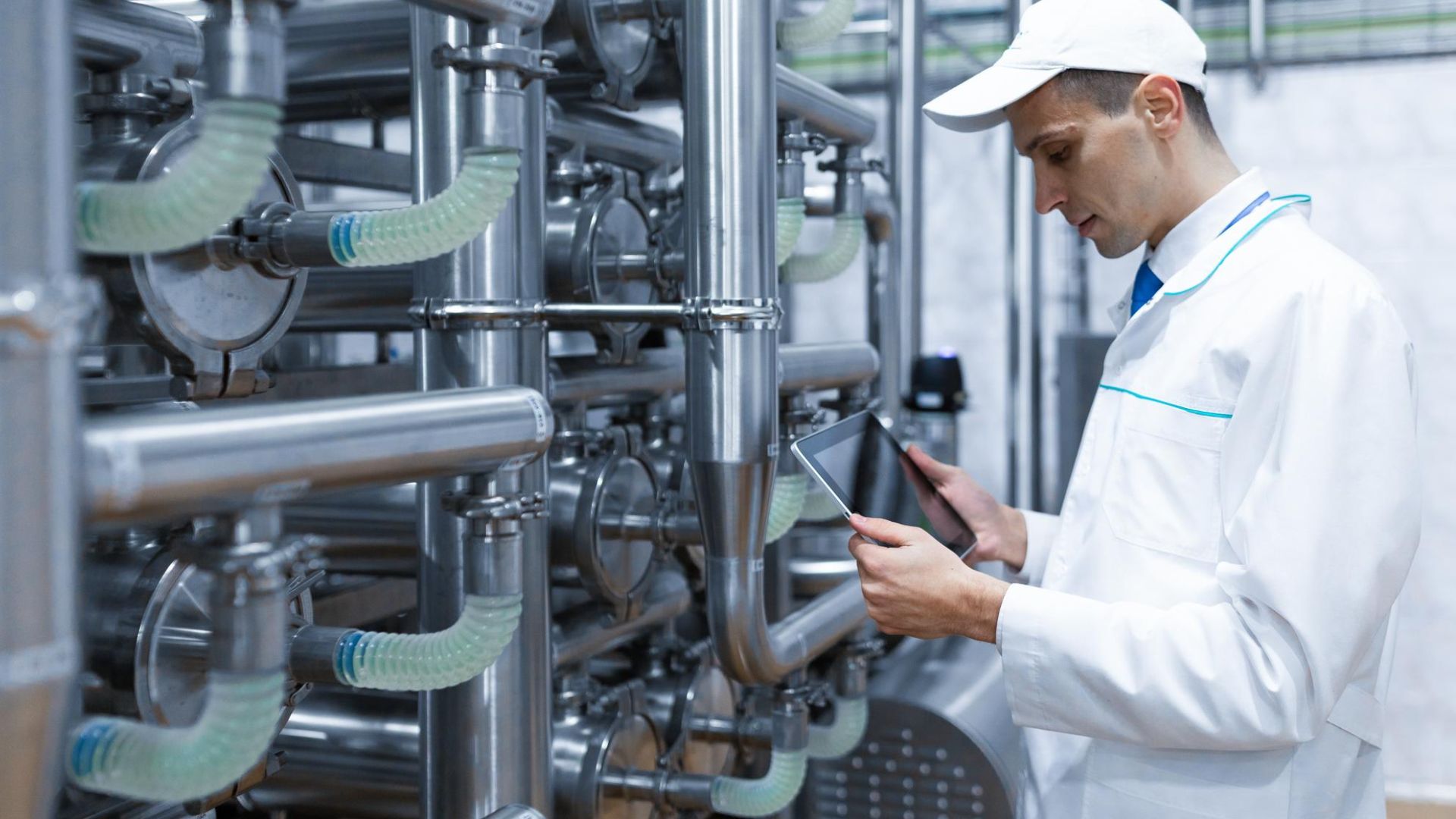
- Laboratory plumbing design requires specialized chemical waste systems, piping materials selected for chemical compatibility, and acid neutralization before sewer discharge.
- Emergency eyewash and safety shower stations must comply with ANSI Z358.1 — including tepid water delivery, 15-minute minimum flow, and location within 10 seconds of the hazard.
- Ultra-pure water systems for analytical instruments require multi-stage treatment including RO, deionization, UV treatment, and final polishing — distinct from standard potable supply.
- Laboratory gas systems distributing hydrogen, oxygen, or flammable gases require hazardous location electrical classification in adjacent spaces and excess flow protection.
- California POTWs require industrial pretreatment permits for laboratories discharging chemical waste above defined thresholds — the plumbing design must incorporate the required monitoring and treatment provisions.
- Budlong’s plumbing engineers have designed systems for pharmaceutical, biomedical, university, and private research laboratory facilities throughout California.
- What Makes Lab Plumbing Design Unique
- Chemical Waste Drain Systems
- Acid Neutralization Systems
- Emergency Eyewash and Safety Shower Systems
- Ultra-Pure and Deionized Water Systems
- Laboratory Gas Distribution Systems
- Chemical Fume Hood Plumbing Connections
- California Pretreatment Permits
- Code Compliance for Lab Plumbing
- Who Uses Laboratory Plumbing Design Services?
- Related Reading
- Frequently Asked Questions
Laboratory plumbing design is one of the most technically demanding and liability-laden specialties within the plumbing engineering discipline. Unlike a commercial office building where a drain is a drain and water is water, laboratory facilities require a completely different set of engineering decisions at every system level. The chemical waste stream may be acidic, solvent-laden, or contain heavy metals that would destroy standard drain piping. The emergency eyewash station that sits unused for months must deliver tepid water at code-compliant flow and temperature the moment a researcher experiences a chemical splash. The ultra-pure water system feeding an analytical instrument must deliver water so free of contaminants that a single plumbing specification error can render expensive equipment unreliable.
At Budlong, our plumbing engineering services team has designed laboratory plumbing systems for pharmaceutical R&D facilities, biomedical research buildings, university science labs, and private analytical laboratories throughout California. This guide covers the engineering principles and code requirements that define professional laboratory plumbing system design.
1. What Makes Lab Plumbing Design Unique
Standard commercial plumbing engineering operates within a relatively predictable parameter space: potable water in, sanitary waste out, hot water available at fixtures, drains sized for plumbing code fixture unit loads. Laboratory plumbing engineering operates in a fundamentally different context defined by the specific chemicals used in the laboratory, the research processes conducted there, and the regulatory requirements that govern chemical discharge, worker safety, and water quality.
The consequences of laboratory plumbing design errors extend beyond building performance into worker safety and environmental compliance. An improperly specified drain material that degrades when exposed to a specific solvent can result in chemical spill and worker exposure. An emergency eyewash station plumbed to deliver water above 100°F can cause thermal burns during a chemical flush that compounds the original injury. A neutralization system that discharges acidic waste below the POTW’s pH limit can result in regulatory violations, permit revocation, and substantial fines. MEP design services for industrial and research operations at Budlong incorporate laboratory plumbing expertise built from extensive project experience across California.
2. Chemical Waste Drain Systems
The chemical waste drain system collects all drainage from laboratory sinks, fume hood cup sinks, equipment drain connections, and floor drains in laboratory areas and routes it to a chemical waste treatment system before discharge. This system is entirely separate from the building’s sanitary drain system — under no circumstances may laboratory chemical waste be discharged to the sanitary system without appropriate treatment.
Piping Material Selection
The most critical design decision in chemical waste drain system design is piping material selection. The material must be chemically compatible with the specific waste streams expected in each laboratory area — a compatibility that cannot be generalized across different laboratory types. The primary options are:
High-density polypropylene (HDPP) is the most widely specified material for general chemistry and biology laboratory chemical waste. It resists most acids, bases, and solvents at concentrations typically encountered in laboratory drains. HDPP is joined by heat fusion, producing leak-tight joints that are resistant to most laboratory chemicals. It is less suitable for concentrated hydrochloric acid above 35 percent, concentrated nitric acid above 60 percent, or chlorinated hydrocarbon solvents.
PVDF (polyvinylidene fluoride) is specified when concentrated acids, oxidizing acids (concentrated nitric, chromic, or perchloric acid), or chlorinated solvents are expected. PVDF has broader chemical compatibility than HDPP but is significantly more expensive.
Borosilicate glass drain systems are used when full chemical transparency is required for regulatory compliance verification or when an extremely wide range of chemicals — including those that would attack polymer piping — must be accommodated. Glass systems are more fragile than polymer systems and require careful support and protection from mechanical damage.
| Material | Typical Applications | Chemical Resistance | Relative Cost | Joint Method |
|---|---|---|---|---|
| HDPP (Polypropylene) | General chemistry, biology labs | Good for dilute acids, bases, most solvents | Moderate | Heat fusion / mechanical |
| PVDF | Concentrated acid, oxidizer labs | Excellent — broad chemical resistance | High | Heat fusion |
| Borosilicate Glass | Aggressive chemicals, HF labs | Excellent — withstands most chemicals except HF | Very High | Beaded/flanged couplings |
| Standard PVC | Not recommended for lab chemical waste | Poor with many common lab chemicals | Low | Solvent cement |
Separate Drain Systems for Incompatible Waste Streams
Some laboratory operations generate waste streams that are chemically incompatible with each other and must be kept separate until they have been treated. Perchloric acid — a powerful oxidizing acid used in digestion procedures — reacts violently with organic solvents and must be handled in a dedicated perchloric acid fume hood with its own dedicated polypropylene drain and wash-down system that routes to a dedicated perchlorate waste collection point. Cyanide-containing waste must not be mixed with acid waste because the combination generates hydrogen cyanide gas. The plumbing engineer must understand the chemical inventory of each laboratory space and design appropriate segregated drain systems where incompatibility requires them.
3. Acid Neutralization Systems
Acid neutralization (also called acid dilution) systems collect chemical waste from laboratory drains and adjust pH to acceptable levels for sewer discharge before releasing treated effluent to the municipal sanitary sewer. Most California POTWs require laboratory chemical waste to be discharged at pH between 5.0 and 11.0, and many have local limits more stringent than this baseline.
Passive Dilution Sumps
For small laboratories with low-volume, relatively dilute acid waste, a passive dilution sump — a polypropylene tank with a weir or baffled outlet — provides residence time for chemical mixing and pH stabilization before discharge. Passive systems rely on mixing of acid and base waste streams within the sump to achieve neutralization, and work best when the laboratory simultaneously generates both acidic and alkaline waste. They require no chemicals or controls but cannot compensate for unbalanced waste streams where only acid or only base is discharged at a given time.
Automated pH-Adjustment Systems
Larger laboratories, or those with variable or predominantly acidic waste streams, require automated pH-adjustment systems that continuously monitor influent pH and dose appropriate neutralizing chemicals (sodium hydroxide for acid neutralization, citric acid or CO2 for base neutralization) to achieve compliant effluent pH before discharge. These systems include influent collection tanks, pH sensors, dosing pumps and chemical storage, effluent pH monitoring, and discharge control valves that hold effluent until compliance is confirmed. Automated systems are more expensive and require ongoing maintenance and chemical replenishment, but provide reliable compliance regardless of waste stream variability. MEP design for industrial and laboratory operations at Budlong includes acid neutralization system sizing and specification as a standard element of laboratory plumbing design.
4. Emergency Eyewash and Safety Shower Systems
Emergency eyewash stations and safety showers are life-safety plumbing systems that must be engineered with the same rigor as fire suppression systems — they must work immediately and reliably at the moment of need, often after extended periods of non-use, and they must deliver water at a flow rate and temperature that provides effective first aid rather than compounding the original injury.
ANSI Z358.1 Requirements
ANSI Z358.1 — the American National Standard for Emergency Eyewash and Shower Equipment — is the defining standard for emergency safety equipment design in laboratory environments. Its key requirements include: eyewash stations must deliver a minimum 0.4 gallons per minute for 15 minutes; safety showers must deliver a minimum 20 gallons per minute for 15 minutes; water temperature must be tepid (60 to 100°F) to ensure effective use for the required 15-minute flush; units must be located within 10 seconds of travel time (approximately 55 feet) from the hazard, on the same floor level, with no obstructions or barriers requiring a door to be opened.
Tepid Water System Design
Providing tepid water at ANSI Z358.1-compliant temperature to emergency equipment is one of the more challenging plumbing engineering requirements in laboratory design. In California’s climate, cold water supply temperatures can be below 60°F in winter — too cold for compliant emergency eyewash use. Three approaches are used: thermostatic tempering valves that blend cold and warm water to achieve a tepid supply temperature (requires a hot water supply connection nearby); instantaneous in-line water heaters at each eyewash/shower location; or a dedicated tepid water recirculating system that maintains tepid water temperature throughout a continuous recirculating loop serving all emergency equipment. The choice depends on the number and distribution of emergency equipment locations and the building’s hot water system configuration. Plumbing engineering considerations for temperature-controlled systems apply equally to laboratory emergency equipment design.
Weekly Activation and Flushing
ANSI Z358.1 requires that all emergency eyewash and safety shower equipment be activated weekly to verify operation and flush any stagnant water from the supply piping. The weekly flushing requirement has plumbing design implications: emergency equipment connected to low-flow or stagnant supply branches must have provisions for effective weekly flushing without contaminating laboratory areas. Automatic weekly flushing controllers — electronic timers that activate the unit for a defined flush period and drain waste to the floor drain — are increasingly specified to ensure compliance without requiring manual laboratory safety coordinator intervention.
Emergency eyewash and shower installations that use stagnant supply water — branches that are not regularly flushed — present a Legionella risk in addition to non-compliance with ANSI Z358.1. The supply piping to every emergency equipment location must be included in the building’s Water Management Plan per ASHRAE Standard 188, with weekly flushing and periodic Legionella testing if applicable. Design for accessibility and ease of weekly flushing from the outset.
5. Ultra-Pure and Deionized Water Systems
Many laboratory instruments and processes require water far purer than municipal potable supply — water from which essentially all dissolved minerals, organic compounds, particles, and microorganisms have been removed. Designing and distributing ultra-pure water (UPW) is one of the most technically demanding aspects of laboratory plumbing engineering.
Water Quality Grades
ASTM International defines three grades of laboratory water quality. Type I (ultra-pure) water has resistivity of 18 megaohm-centimeters, total organic carbon below 10 ppb, and less than 1 colony-forming unit per mL of bacteria — suitable for the most demanding analytical instruments including HPLC, mass spectrometry, ICP-MS, and cell culture. Type II water is less pure but suitable for most general laboratory reagent preparation and glassware rinsing. Type III (RO water) is suitable for feed water to Type I and II generation systems and for general laboratory use such as autoclave steam generation.
Ultra-Pure Water Generation and Distribution
UPW generation systems use a multi-stage treatment train: pre-filtration to remove particles, activated carbon to remove chlorine and organics, reverse osmosis (RO) to remove dissolved minerals and organics, deionization (DI) — typically a mixed-bed ion exchange resin — to achieve high resistivity, UV treatment at 185 nm to destroy organics and bacteria, and final 0.2 micron membrane filtration. Distribution of UPW requires special considerations: ordinary copper or CPVC piping materials can leach ions that contaminate the ultra-pure water and destroy its quality. UPW distribution piping is typically PVDF or high-purity polypropylene, joined by heat fusion to eliminate potential contamination at joints. A continuous recirculating loop maintains flow through all UPW distribution piping to prevent biofilm growth in stagnant sections — the recirculation pump and all loop components must be UPW-grade materials.
6. Laboratory Gas Distribution Systems
Laboratory buildings require distribution of a range of specialty gases from central cylinder storage areas (or bulk supply tanks) to individual laboratory benches and equipment. The engineering requirements for laboratory gas systems are governed by NFPA 55 (Compressed Gases and Cryogenic Fluids Code), NFPA 45 (Laboratory Standard), and Cal/OSHA regulations for compressed gas storage and handling.
Gas System Piping Materials
Gas piping material must be selected for compatibility with each specific gas. Copper Type K or L tubing (cleaned for oxygen service) is appropriate for most inert gases, compressed air, and vacuum. Stainless steel (316 SS) tubing with orbital welded joints is required for ultra-high-purity gas supply to analytical instruments where trace metal contamination from copper would be detectable. Hydrogen and other flammable gases require special hazard classification considerations for the spaces containing the piping, per NEC Article 500 and NFPA 55. The air handling for these controlled spaces is a separate discipline, covered in cleanroom HVAC design.
Pressure Regulation and Safety Provisions
Gas distribution systems include multiple stages of pressure regulation: a building regulator at the cylinder manifold reduces high cylinder pressure (2,000+ psi) to building distribution pressure (typically 100 to 125 psi), and local regulators at each laboratory bench or equipment connection reduce distribution pressure to the working pressure of the specific instrument (1 to 80 psi depending on application). Excess flow valves at each outlet limit discharge in the event of a line break downstream. Manual isolation valves accessible without entering the laboratory — called emergency shut-off valves (ESOVs) — are required for flammable and toxic gas systems at defined locations per NFPA 45 and Cal/OSHA. Fire safety engineering in MEP coordinates with laboratory gas system design for hazardous gas applications.
Laboratory Plumbing Engineering from Budlong
Our licensed plumbing engineers design complete laboratory plumbing systems — chemical waste, acid neutralization, emergency safety equipment, ultra-pure water, and specialty gas distribution — for pharmaceutical, biomedical, university, and private research facilities throughout California.
7. Chemical Fume Hood Plumbing Connections
Chemical fume hoods are the primary exposure control device in chemistry laboratories, and their plumbing connections are a critical interface between the laboratory plumbing systems and the laboratory equipment.
Cup Sink and Cold Water Connections
Most chemistry fume hoods include a cup sink (a small cup-shaped sink integrated into the hood liner) that requires a cold water connection and a drain connection. The cold water connection uses standard domestic cold water supply — typically 3/8 inch OD copper tubing with a self-closing faucet. The drain from the cup sink must route to the chemical waste drain system, not to the sanitary drain, because chemicals used in the hood are routinely rinsed into the cup sink. This routing requirement must be explicitly shown on the plumbing drawings — the default plumbing contractor assumption is that all sinks drain to sanitary unless specifically noted otherwise.
Gas Connections
Fume hoods requiring natural gas for Bunsen burners are provided with a 1/2 inch gas connection with a manual shut-off valve accessible outside the hood sash. Inert gas connections for gas chromatography carrier gas or reaction atmosphere control are similarly provided as small-diameter tubing connections with individual shut-off valves. Each gas connection must be identified by gas type and pressure on the plumbing drawings and in the hood connection schedule.
8. California Pretreatment Permits for Laboratory Chemical Waste
Most California POTWs require industrial and laboratory facilities that discharge chemical waste above defined thresholds to obtain and comply with an industrial pretreatment permit. The permit establishes local limits — maximum allowable concentrations of specific pollutants in the discharge — that must be met at the point of connection to the municipal sewer.
Local Limits Commonly Applicable to Laboratories
California POTW local limits commonly applicable to laboratory chemical waste include: pH between 5.0 and 11.0, heavy metals (arsenic, cadmium, chromium, copper, lead, mercury, nickel, silver, zinc) below specified mg/L thresholds, total toxic organics (TTOs) below 2.13 mg/L, and prohibition on discharge of priority pollutants above defined detection limits. Some POTWs with stricter permits (typically those with water recycling programs or sensitive receiving water bodies) apply more stringent limits that may require treatment beyond simple acid neutralization.
Monitoring and Reporting Requirements
Pretreatment permits typically require periodic sampling and analysis of discharge at the monitoring point (typically the outlet of the acid neutralization system) to verify compliance with local limits. The plumbing design must include a compliant sampling port at the point of monitoring — sized and located to allow representative sample collection. The plumbing engineer’s design documentation identifies the required sampling port location and specification to ensure that contractors install it correctly. MEP design for laboratory and industrial operations includes permit compliance review as part of the engineering scope on projects with industrial pretreatment requirements.
9. Code Compliance for Laboratory Plumbing in California
Laboratory plumbing design in California is governed by multiple overlapping codes and standards that must all be satisfied simultaneously.
California Plumbing Code (CPC)
The California Plumbing Code establishes the baseline requirements for all plumbing systems including laboratory applications. CPC Chapter 7 covers laboratory and industrial drainage systems, specifying requirements for chemical waste systems, approved materials, and connection requirements. CPC Chapter 6 governs water supply, including cross-connection prevention requirements that are particularly relevant in laboratories where chemical backflow to the potable supply is an enhanced risk due to the presence of chemical containers and process equipment near water supply connections.
NFPA 45 — Laboratory Standard
NFPA 45 (Standard on Fire Protection for Laboratories Using Chemicals) establishes requirements for laboratory construction, HVAC, and plumbing safety provisions — including requirements for emergency shut-off provisions for flammable gas systems, containment provisions for flammable liquid storage, and requirements for spill containment in areas where flammable liquids are used. Fire safety engineering in MEP coordinates with laboratory plumbing design to satisfy NFPA 45 provisions.
OSHA and Cal/OSHA Laboratory Standards
OSHA’s Laboratory Standard (29 CFR 1910.1450) and Cal/OSHA’s parallel regulations establish requirements for chemical hygiene plans, emergency response provisions, and worker safety equipment — including the emergency eyewash and safety shower requirements that ANSI Z358.1 addresses in engineering detail. The plumbing engineer’s design must satisfy both the engineering requirements of ANSI Z358.1 and the operational requirements of OSHA’s laboratory standard to provide a compliant and safe laboratory environment.
10. Who Uses Laboratory Plumbing Design Services?
- Pharmaceutical and Biotech R&D — GMP-compliant water systems, USP Purified Water, and chemical waste pretreatment for API synthesis
- University Research Facilities — Academic research buildings with chemistry, biology, and materials science labs requiring multi-system plumbing
- Analytical and Testing Laboratories — Environmental, food safety, and forensic labs requiring UPW, acid waste, and ISO-compliant facility design
- Semiconductor and Advanced Manufacturing — Ultra-high-purity water, aggressive chemical waste, and hazardous gas systems for process facilities
- Healthcare Research Facilities — Hospital research labs requiring OSHPD compliance alongside laboratory-specific plumbing requirements
11. Related Reading
- Laboratory plumbing requires chemical waste drain systems with materials selected for compatibility with specific chemicals — HDPP, PVDF, or borosilicate glass, not standard PVC.
- Acid neutralization systems are required by California POTWs before laboratory chemical waste can be discharged to the municipal sewer — passive dilution or automated pH-adjustment depending on volume and variability.
- Emergency eyewash and safety shower stations must comply with ANSI Z358.1: tepid water, 15-minute duration, 0.4 GPM (eyewash) or 20 GPM (shower), within 10 seconds of hazard.
- Ultra-pure water systems require multi-stage treatment (RO, DI, UV, final filtration) and PVDF or high-purity polypropylene distribution piping in a continuous recirculating loop.
- Laboratory gas systems require material compatibility, pressure regulation at every use point, excess flow protection, and emergency shut-off provisions for flammable and toxic gases.
- Incompatible waste streams — perchloric acid, cyanides, reactive organic waste — must be maintained in separate drain systems until properly collected or treated.
- California POTW pretreatment permits govern chemical discharge limits and monitoring requirements — the plumbing design must incorporate compliant sampling ports and treatment provisions.
For technical reference, consult NFPA 45 Standard on Fire Protection for Laboratories Using Chemicals, ANSI Z358.1 Emergency Eyewash and Shower Equipment Standard, the California Plumbing Code Chapter 7 — Laboratory Drainage, EPA Laboratory Category Effluent Guidelines, and ASTM D1193 Standard for Reagent Water grades.
12. Frequently Asked Questions
What makes laboratory plumbing design different from standard commercial plumbing?
Laboratory plumbing must handle chemical waste incompatible with standard drain materials, provide ANSI Z358.1-compliant emergency safety equipment, distribute ultra-pure water for analytical instruments, supply specialty gases safely, and comply with POTW pretreatment permit requirements for chemical discharge. These requirements create a fundamentally different design challenge from commercial office or retail plumbing. See Budlong’s plumbing engineering services for laboratory capabilities.
What materials are used for acid waste drain piping in laboratories?
Acid waste drain piping is selected based on chemical compatibility with specific waste streams. HDPP (high-density polypropylene) is the most widely specified for general chemistry and biology labs. PVDF is specified for concentrated acids, oxidizers, and chlorinated solvents. Borosilicate glass is used for the most aggressive chemical environments. Standard PVC is not suitable for most laboratory chemical waste streams and should not be specified.
What is an acid neutralization system and when is it required?
An acid neutralization system collects laboratory chemical waste and adjusts pH to acceptable discharge limits (typically pH 5.0 to 11.0) before release to the municipal sewer. California POTWs require neutralization before sewer discharge for facilities generating chemical waste above permit thresholds. Passive dilution sumps suffice for low-volume, mixed-pH waste; automated pH-adjustment systems with chemical dosing are required for high-volume or predominantly acidic streams.
What are the ANSI Z358.1 requirements for emergency eyewash and safety showers?
ANSI Z358.1 requires eyewash stations to deliver 0.4 GPM minimum of tepid water (60 to 100°F) for 15 minutes; safety showers must deliver 20 GPM minimum for 15 minutes. Both must be within 10 seconds of travel from the hazard, on the same level, with no doors in the path, and activatable with a single motion. Tepid water requires a thermostatic tempering system or dedicated tepid water loop in most California laboratory buildings.
What is ultra-pure water (UPW) and which laboratory applications require it?
Ultra-pure water (ASTM Type I) has resistivity of 18 megaohm-cm, TOC below 10 ppb, and near-zero particle and bacterial counts. It is required for HPLC, mass spectrometry, ICP-MS, cell culture, and pharmaceutical manufacturing (USP Purified Water). UPW systems use multi-stage treatment (pre-filtration, carbon, RO, DI, UV, membrane) and distribute through PVDF or high-purity polypropylene piping in a continuous recirculating loop.
What laboratory gases are typically distributed through a building plumbing system?
Laboratory gas systems commonly distribute compressed air, nitrogen, argon, helium, hydrogen, oxygen, carbon dioxide, natural gas, and vacuum. Each gas requires compatible piping material (copper for inert gases and air; stainless steel for UHP analytical gas), pressure regulation, excess flow protection, and — for flammable or toxic gases — emergency shut-off valves accessible without entering the lab. Fire safety engineering governs flammable gas system design.
How are laboratory plumbing systems coordinated with chemical fume hoods?
Fume hood cup sinks require cold water connections (3/8 inch OD with self-closing faucet) and drain connections to the chemical waste system — not the sanitary drain. Gas connections are provided for natural gas and inert gases with individual manual shut-off valves. All connections are shown on hood connection schedules in the plumbing drawings, and drain routing to chemical waste must be explicitly noted to prevent contractor error in routing to sanitary.
What pretreatment permits are required for laboratory chemical waste in California?
California POTWs require industrial pretreatment permits for facilities discharging chemical waste above defined thresholds. Permits establish local limits for pH, heavy metals, organic solvents, and other parameters. The plumbing design must incorporate acid neutralization or chemical treatment systems to meet permit limits, and a compliant sampling port at the discharge point for periodic compliance monitoring. Budlong’s industrial MEP services include permit compliance review as part of the project scope.