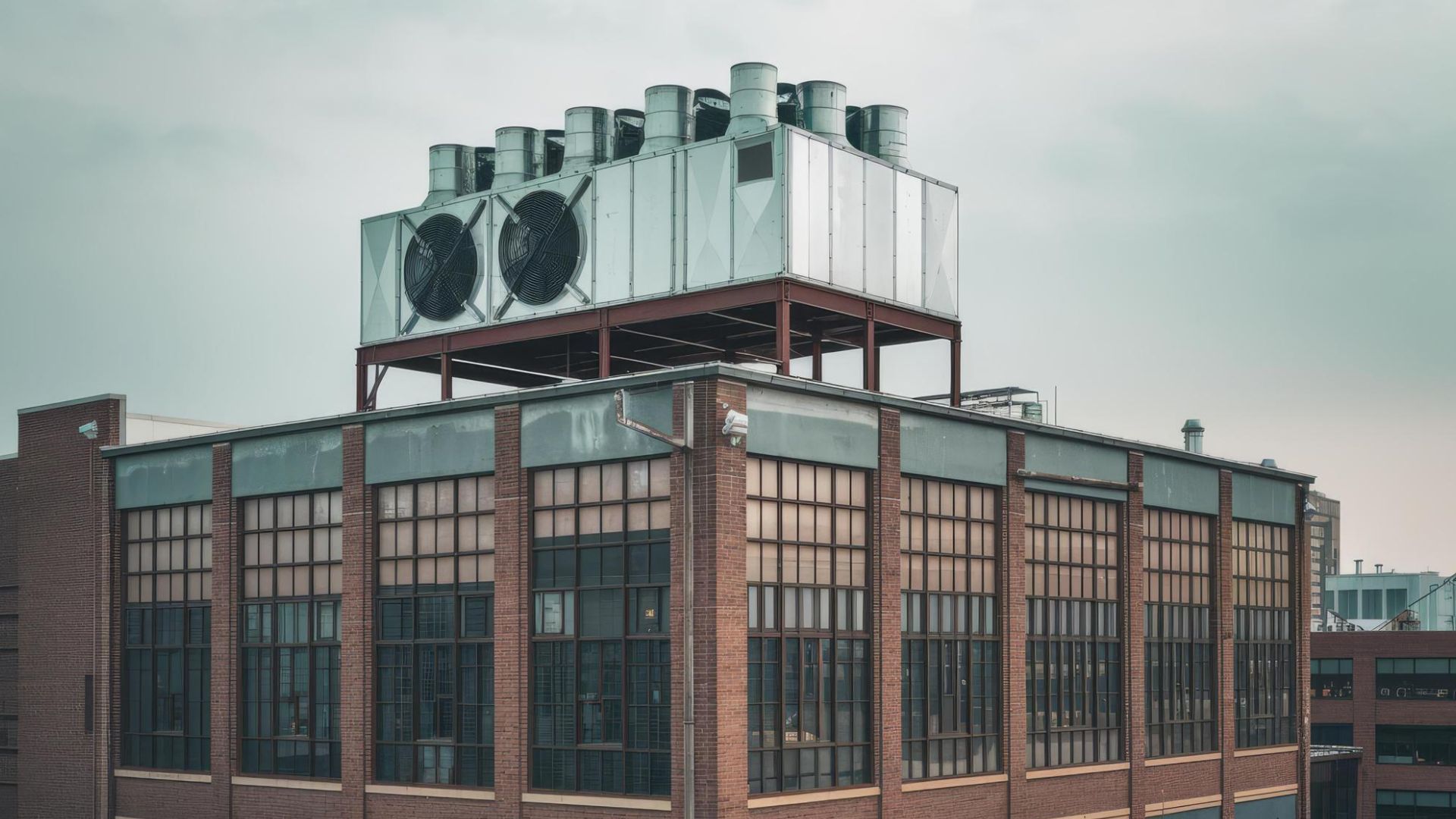
- Commercial HVAC system selection is one of the most consequential design decisions affecting first cost, energy performance, tenant comfort, and lifecycle maintenance.
- The five primary system types — packaged RTU, VRF, chilled water, DOAS, and VAV — each have distinct strengths suited to different building sizes and occupancies.
- Building size, occupancy type, climate zone, redundancy requirements, and lifecycle cost analysis are the key drivers of HVAC system selection.
- California Title 24 2022 establishes minimum efficiency requirements and heat pump technology provisions that significantly influence system selection for new construction.
- VRF systems are generally preferred for buildings under 100,000 SF; chilled water systems for larger, more complex buildings.
- Budlong’s mechanical engineers provide system selection guidance and full HVAC design services for commercial projects throughout California.
- Why HVAC System Selection Matters
- Key HVAC System Selection Criteria
- Packaged Rooftop Units (RTUs)
- Variable Refrigerant Flow (VRF) Systems
- Chilled Water Systems with AHUs
- Dedicated Outdoor Air Systems (DOAS)
- Variable Air Volume (VAV) Systems
- Commercial HVAC System Comparison
- California Title 24 and System Selection
- Who Uses Commercial HVAC Design Services?
- Related Reading
- Frequently Asked Questions
The choice of HVAC system for a commercial building is one of the most consequential engineering decisions made in the entire project. It affects construction cost, ongoing energy expenditure, tenant comfort, maintenance requirements, noise levels, equipment room requirements, and the building’s ability to meet California Title 24 energy compliance standards. Get it right and the building performs well for decades. Get it wrong and developers, owners, and tenants live with the consequences for just as long.
At Budlong, our HVAC design services team guides clients through this decision systematically — evaluating building type, occupancy profile, climate zone, budget, and performance targets before recommending a system type. This guide walks through the main commercial HVAC system options, their strengths and limitations, and the criteria that should drive selection for each building type.
1. Why HVAC System Selection Matters
HVAC systems represent the largest single mechanical construction cost on most commercial projects, typically 15 to 25 percent of total building construction cost. Beyond first cost, the HVAC system determines a building’s energy consumption for its entire operating life — often 30 to 50 years. A poor system selection that costs $200,000 less to install but consumes $40,000 more per year in energy reaches a negative net present value within five years and continues to underperform for decades.
System selection also affects the architectural design. Different HVAC systems have very different space requirements for mechanical rooms, equipment rooms, ceiling plenum depths, roof loading, and shaft penetrations. Decisions made late — or made without MEP engineering input — can force expensive architectural revisions or result in constrained ceiling heights that compromise the finished product. This is why HVAC engineers should be engaged before architectural finalization.
2. Key HVAC System Selection Criteria
A structured HVAC system selection process evaluates each option against a defined set of criteria weighted by the project’s specific priorities. The following criteria apply to virtually every commercial building decision.
Building Size and Configuration
Building gross square footage is the most fundamental system selection filter. Small buildings (under 10,000 SF) are most economically served by split systems or packaged rooftop units. Medium buildings (10,000 to 100,000 SF) are well-suited to VRF or rooftop VAV systems. Large buildings above 100,000 SF generally warrant evaluation of chilled water systems for their superior efficiency at scale.
Occupancy Type and Schedule
A 24/7 data center has very different HVAC requirements than a single-tenant office building occupied from 8 AM to 6 PM Monday through Friday. Buildings with diverse occupancy schedules — retail, mixed-use, hotels — benefit from systems that can efficiently serve zones with widely varying load profiles simultaneously. Healthcare facilities require systems with redundancy and precise environmental control that most other building types do not need.
Tenant Flexibility Requirements
Multi-tenant office buildings need HVAC systems that can be reconfigured when tenants change. Systems with granular zone control and flexible piping or refrigerant circuit configurations — such as VRF — make tenant improvements easier and less expensive. Central systems with large air handling units are harder to reconfigure when floor plates are subdivided or combined.
First Cost versus Lifecycle Cost
Some system types have lower first cost but higher operating costs; others require greater upfront investment but pay back through energy savings over the building’s life. Lifecycle cost analysis (LCA) using a net present value calculation over a 20 to 30 year period is the most accurate basis for comparing alternatives. Energy-efficient MEP design consistently demonstrates that the lifecycle cost perspective favors higher-efficiency systems over their operating life.
3. Packaged Rooftop Units (RTUs)
Packaged rooftop units (RTUs) are self-contained HVAC units installed on the building roof that contain the compressor, condenser, evaporator, supply fan, and controls in a single factory-assembled package. RTUs supply conditioned air through rooftop ductwork penetrations and return air ductwork in the ceiling plenum.
Strengths of Packaged RTUs
RTUs are the lowest-cost commercial HVAC option on a first-cost basis for low-rise buildings. They are factory-built and tested before delivery, reducing field installation time and quality risk. Maintenance is straightforward because all components are in a single accessible location on the roof. RTUs are the dominant system type for low-rise retail, light commercial, and institutional buildings throughout California.
Limitations of Packaged RTUs
RTUs are limited in their zone control granularity — each unit serves one or more zones connected to the same supply air system, and simultaneous heating in some zones while cooling others requires either multiple units or supplemental heating systems. RTUs also impose significant roof structural loading and require adequate roof space and clearances. For buildings above three to four stories, RTU refrigerant line lengths become impractical and chilled water or VRF systems are preferred.
When RTUs Are the Right Choice
RTUs are ideal for single-story retail, warehouse offices, light manufacturing, schools with simple zoning requirements, and low-rise multi-tenant office buildings where individual tenants have dedicated units. High-efficiency RTU options with variable speed fans, economizers, and demand-controlled ventilation meet California Title 24 requirements. Current HVAC design trends include heat pump RTUs as an all-electric alternative to gas heating RTUs for California new construction compliance.
4. Variable Refrigerant Flow (VRF) Systems
Variable refrigerant flow (VRF) systems use variable-speed compressor technology to modulate refrigerant flow to multiple indoor units connected to a single outdoor unit or set of outdoor units. Each indoor unit serves a zone independently, allowing simultaneous heating and cooling in different areas of the building — a significant advantage in buildings with diverse occupancy and exposure patterns.
Strengths of VRF Systems
VRF systems offer the finest zone-level temperature control of any commercial HVAC system type, with each indoor unit independently controllable. Heat recovery VRF systems capture heat rejected by cooling zones and deliver it to zones requiring heating simultaneously, achieving very high efficiency in buildings with mixed loads. VRF eliminates the need for large mechanical rooms because the refrigerant piping is small-diameter and the indoor units are distributed. The flexibility to serve odd-shaped, multi-tenant floor plates without large duct systems makes VRF ideal for tenant improvement projects and buildings with complex floor plan requirements.
Limitations of VRF Systems
VRF systems have limitations on maximum piping length and elevation change between outdoor and indoor units, which constrains their applicability in very tall high-rise buildings. Refrigerant leak detection requirements per ASHRAE 15 and California Mechanical Code must be addressed in occupied spaces. VRF systems require specialized service technicians and manufacturer-specific diagnostic tools for maintenance and troubleshooting. The outdoor condensing equipment, while more compact than chiller plants, still requires adequate roof or ground space and acoustic treatment in noise-sensitive environments.
5. Chilled Water Systems with Air Handling Units
Chilled water systems use central chillers to produce cold water that is distributed through insulated piping to air handling units (AHUs) and fan coil units throughout the building. The AHUs cool supply air by passing it over chilled water cooling coils, and the same distribution infrastructure can serve a heating hot water system for winter heating.
Strengths of Chilled Water Systems
Chilled water systems are the gold standard for large commercial buildings, high-rise towers, campuses, and healthcare facilities because of their exceptional scalability, redundancy capability, and maintainability. Central chillers are highly efficient at full and part load when properly controlled with variable speed drives and sequencing. The water-based distribution medium has no refrigerant leak risk in occupied spaces. Central plant maintenance is performed by facility staff on accessible equipment in a dedicated mechanical room without disrupting occupied zones. Chilled water systems also integrate naturally with thermal energy storage — chilling water at night for daytime use — a powerful peak demand reduction strategy.
Limitations of Chilled Water Systems
Chilled water systems have the highest first cost of any commercial HVAC system type due to the complexity of the central plant, the extent of piping distribution, and the larger AHU equipment. They require dedicated mechanical rooms, chiller plant space, and cooling tower or condenser water infrastructure (for water-cooled systems). For buildings under approximately 50,000 square feet, the economics of a chilled water system rarely justify the investment compared to VRF or rooftop alternatives.
Expert HVAC System Selection from Budlong’s Mechanical Engineers
Our licensed mechanical engineers evaluate all system options against your building’s specific requirements and provide a data-driven recommendation with lifecycle cost analysis included.
6. Dedicated Outdoor Air Systems (DOAS)
A dedicated outdoor air system (DOAS) is an HVAC unit that handles only the outdoor air ventilation requirement, delivering tempered and dehumidified outdoor air to zones at neutral supply temperature. DOAS is used in conjunction with a separate sensible cooling and heating system — such as VRF, fan coils, or radiant panels — that handles the space loads without dealing with the latent (dehumidification) load of outdoor air.
Why DOAS Has Become Standard on Many Projects
Separating the ventilation function from the space conditioning function offers several advantages. The primary space conditioning equipment can be sized purely for sensible loads (which are more predictable and consistent) without oversizing for worst-case outdoor air conditions. The DOAS unit can use energy recovery (heat wheels or run-around coils) to capture energy from exhaust air, significantly reducing the energy required to condition outdoor air. DOAS also simplifies commissioning because outdoor air quantities can be set and measured at the DOAS unit rather than balanced across dozens of terminal units. In California’s mild climates, DOAS with high-efficiency energy recovery is a preferred strategy for meeting Title 24 ventilation and energy requirements. Enhancing indoor air quality through MEP solutions frequently centers on optimized DOAS design.
7. Variable Air Volume (VAV) Systems
Variable air volume (VAV) systems use a central air handling unit to condition and distribute air to zones through ductwork. Each zone is served by a VAV terminal box with a modulating damper that varies airflow based on the zone’s thermostat demand. When zone loads decrease, the damper closes and the supply fan reduces speed — saving energy proportionally to the cube of the speed reduction.
Strengths of VAV Systems
VAV systems are highly energy-efficient at part-load conditions because of their variable speed fan operation. They are well-suited for large open-plan office spaces, institutional buildings, and any application where large zones can be served from a central air handler. VAV systems deliver high ventilation rates easily and are generally the system of choice when very high outdoor air fractions are required, as in laboratories, healthcare, or densely occupied assembly spaces. Maintenance is concentrated at the central AHU, which is accessible in a dedicated mechanical room.
Limitations of VAV Systems
VAV systems require significant ceiling plenum depth for ductwork distribution. The minimum airflow at light load conditions must be maintained to provide adequate ventilation — which means energy savings are not unlimited and some heating may be required to avoid overcooling zones at minimum flow. VAV systems serving perimeter zones must include supplemental heating (electric baseboard, hot water radiation, or heated supply air) to handle winter heating loads at the building perimeter.
8. Commercial HVAC System Comparison
| System Type | Best For | First Cost | Energy Efficiency | Zone Control | Mech Room Required |
|---|---|---|---|---|---|
| Packaged RTU | Low-rise, retail, schools | Low | Moderate | Moderate | No (roof-mounted) |
| Split System | Small buildings, TI projects | Low | Moderate | Good | No |
| VRF Heat Recovery | Mid-rise, multi-tenant, hotels | Moderate | High | Excellent | Minimal |
| VAV with AHU | Large office, institutional | Moderate-High | High (part load) | Good | Yes |
| Chilled Water Plant | High-rise, campus, healthcare | High | Very High (at scale) | Good | Yes (dedicated) |
| DOAS + VRF/Fan Coil | Labs, mixed-use, net-zero | Moderate-High | Very High | Excellent | Minimal |
Hybrid system configurations are increasingly common in California commercial practice. A mid-rise office building might use VRF for tenant zones with a central DOAS handling outdoor air ventilation with energy recovery — combining the zone control advantages of VRF with the ventilation efficiency of a dedicated outdoor air system. Budlong’s mechanical engineers evaluate hybrid options as part of every system selection analysis.
9. California Title 24 and HVAC System Selection
California Title 24 has a profound influence on commercial HVAC system selection through its minimum efficiency requirements, mandatory controls provisions, and — beginning with the 2022 code cycle — heat pump technology requirements for many building types.
Minimum Efficiency Requirements
Title 24 establishes minimum efficiency levels for all major HVAC equipment types: EER (Energy Efficiency Ratio) and SEER (Seasonal Energy Efficiency Ratio) for cooling equipment, COP (Coefficient of Performance) for heating equipment, and IPLV (Integrated Part-Load Value) for chillers. These requirements effectively eliminate the lowest-efficiency equipment options from the market and push system selection toward higher-efficiency configurations. Sustainable MEP design at Budlong consistently specifies equipment that exceeds minimum Title 24 efficiency thresholds.
Mandatory Controls Requirements
Title 24 requires specific controls features for commercial HVAC systems including air economizer cycles (using outdoor air for free cooling when conditions allow), demand-controlled ventilation (reducing outdoor air flow when occupancy is below design), variable speed drives on fans and pumps above a specified horsepower threshold, and automatic setback during unoccupied hours. These controls are not optional features — they are code-mandated and must be designed into the system from the outset. Smart building technology implementation aligns closely with Title 24 controls mandates.
2022 Code Heat Pump Requirements
California’s 2022 Title 24 code cycle significantly expanded heat pump technology requirements for new residential construction and introduced provisions for commercial buildings that push toward all-electric HVAC systems. For commercial new construction, buildings that choose heat pump systems rather than gas heating equipment can receive efficiency compliance credit. Many California jurisdictions have also adopted local reach codes that go beyond Title 24 to require all-electric systems in new construction — eliminating natural gas HVAC options entirely in some cities. The impact of electrification on MEP engineering is a critical topic for California commercial HVAC design today.
10. Who Uses Commercial HVAC Design Services?
- Commercial Office — Multi-tenant and single-tenant office buildings, including high-rise and campus configurations
- Healthcare — Healthcare HVAC design with infection control ventilation and redundant systems
- Education — School and university HVAC compliant with California DSA requirements
- Hospitality — Hotel HVAC design balancing guest comfort with operating cost efficiency
- Mixed-Use and Multi-Family — High-rise residential MEP and mixed-use development HVAC
- Industrial and Laboratory — Process HVAC for manufacturing, R&D, and specialized facilities
11. Related Reading
- Commercial HVAC system selection should be based on building size, occupancy type, zone control requirements, redundancy needs, and lifecycle cost — not first cost alone.
- Packaged RTUs are best for low-rise, low-complexity buildings; VRF for mid-rise multi-tenant buildings; chilled water for large or high-rise buildings.
- DOAS systems separate ventilation from space conditioning, enabling energy recovery and simplifying commissioning — increasingly preferred in California.
- VAV systems excel in large open-plan spaces; hybrid DOAS plus VRF or fan coil combinations work well for complex mixed-use occupancies.
- California Title 24 2022 mandates minimum equipment efficiency, economizers, demand-controlled ventilation, VFDs, and heat pump provisions for new construction.
- Lifecycle cost analysis over 20 to 30 years consistently favors higher-efficiency systems despite higher first cost in California’s energy pricing environment.
- HVAC engineers should be engaged before architectural finalization to ensure system space requirements are accommodated in the building design.
For authoritative technical guidance, consult the ASHRAE Handbook of HVAC Systems and Equipment, the California Energy Commission Title 24 standards, the ACCA Manual N commercial load calculation procedure, SMACNA HVAC duct construction standards, and the USGBC LEED energy and atmosphere credit requirements.
12. Frequently Asked Questions
What are the main types of HVAC systems used in commercial buildings?
The main commercial HVAC system types are packaged rooftop units (RTUs), variable refrigerant flow (VRF) systems, chilled water systems with air handling units (AHUs), dedicated outdoor air systems (DOAS), split systems, and variable air volume (VAV) systems. Each suits different building sizes, occupancy types, and performance requirements. Budlong’s HVAC design services cover all system types.
How do I choose between a VRF system and a chilled water system?
VRF systems are generally preferred for buildings under 100,000 square feet where tenant flexibility, individual zone control, and lower first cost are priorities. Chilled water systems are preferred for buildings above 100,000 square feet, high-rise buildings, healthcare facilities, and applications requiring the highest redundancy and maintainability. A lifecycle cost analysis over 20 to 30 years is the most reliable decision framework.
What is a dedicated outdoor air system (DOAS) and when is it used?
A dedicated outdoor air system (DOAS) handles only the outdoor air ventilation load, delivering conditioned and dehumidified outdoor air to zones independently of the space conditioning equipment. DOAS is used when precise humidity control is required, when energy recovery is a priority, or when the primary space conditioning system does not handle outdoor air directly. It is increasingly used with VRF systems in California commercial practice.
Which HVAC system is most energy-efficient for commercial buildings in California?
In California’s mild climates, VRF heat recovery systems that provide simultaneous heating and cooling often achieve the highest efficiency for mid-size buildings. For larger buildings, high-efficiency centrifugal chilled water plants with variable speed drives can achieve very high efficiency. DOAS with energy recovery is the preferred ventilation strategy for efficiency regardless of the primary system type chosen.
What HVAC system is best for a multi-tenant office building?
Multi-tenant office buildings typically use either VRF systems for buildings up to roughly 10 stories, or VAV air handling systems with perimeter radiation for larger buildings. Both allow individual tenant metering and zone control. VRF provides finer zone control; VAV provides higher outdoor air delivery and better performance in large open zones.
Does California Title 24 affect HVAC system selection?
Yes, significantly. Title 24 establishes minimum efficiency requirements, mandatory economizer, demand-controlled ventilation, and variable speed drive provisions. The 2022 code cycle also introduced heat pump technology requirements and all-electric pathways that influence system type selection for new construction. Electrification’s impact on MEP engineering is reshaping California HVAC system selection.
What is a VAV (Variable Air Volume) system?
A variable air volume system uses a central air handling unit to condition and distribute air through ductwork to zone terminal boxes with modulating dampers. Airflow to each zone varies based on thermostat demand, and the supply fan reduces speed at reduced loads — saving energy proportionally to the cube of the speed reduction. VAV systems are well-suited for large open-plan commercial spaces and institutional buildings.
How does building size affect HVAC system selection?
Building size is the most fundamental filter for system selection. Small buildings under 10,000 SF typically use split systems or packaged RTUs. Mid-size buildings from 10,000 to 100,000 SF are well-served by VRF or rooftop VAV systems. Large buildings above 100,000 SF generally favor chilled water systems for efficiency at scale, redundancy capability, and maintainability over the building’s life.