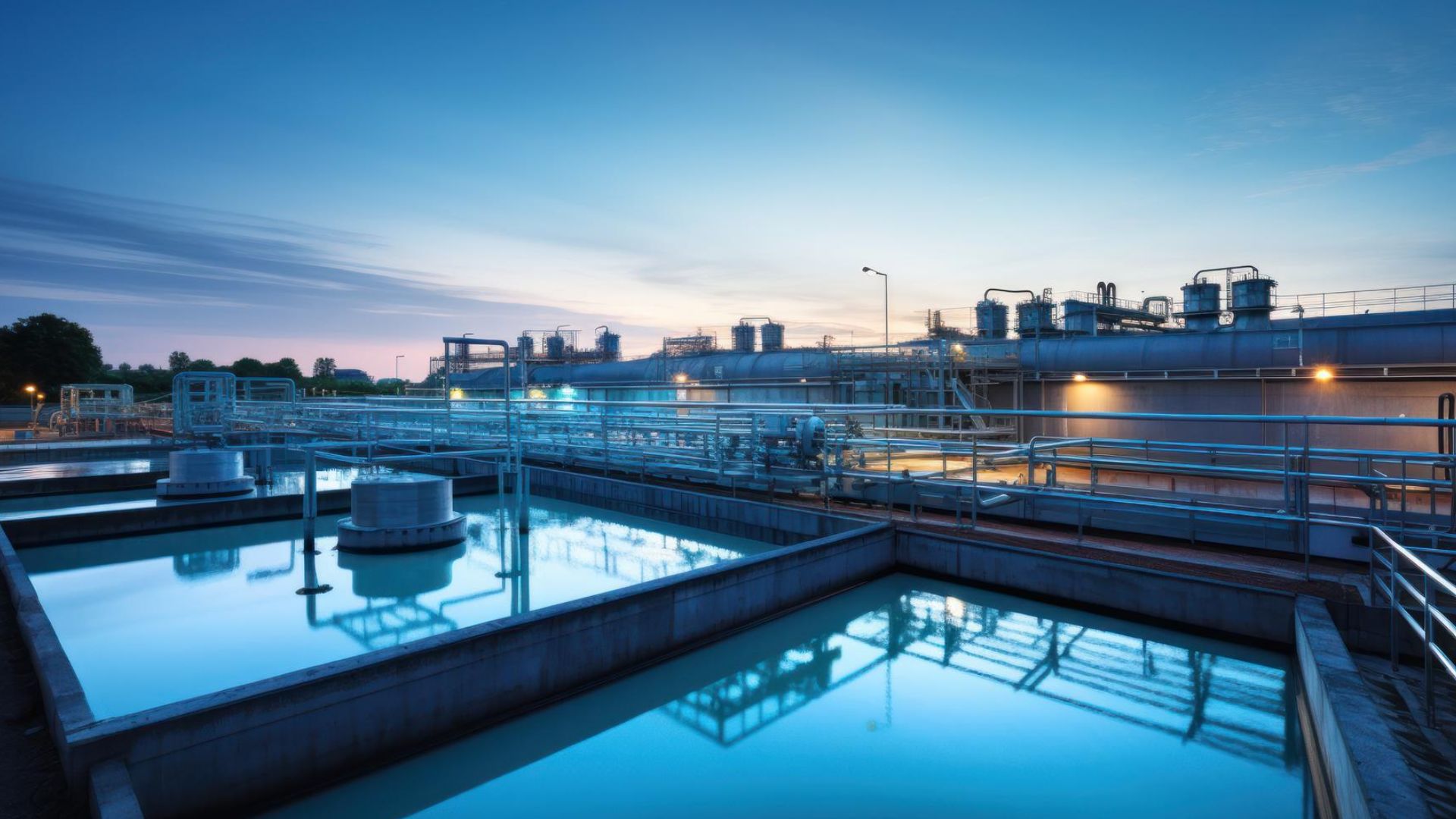
- Chilled water systems are the preferred HVAC infrastructure for high-rise commercial buildings above approximately 100,000 SF due to superior efficiency, scalability, and redundancy capability.
- Variable primary flow (VPF) systems are the current preferred piping configuration, offering lower pump energy than primary-secondary systems with proper controls design.
- Water-cooled centrifugal chillers achieve COP values of 5 to 7 — significantly more efficient than air-cooled chillers at equivalent capacity.
- High-rise buildings above approximately 20 stories require pressure zone isolation to prevent excessive system pressure in lower floors.
- Thermal energy storage can dramatically reduce peak electrical demand charges by shifting chiller operation to off-peak nighttime hours.
- Budlong’s mechanical engineers design chilled water systems for high-rise commercial, healthcare, campus, and institutional projects throughout California.
- Why Chilled Water Systems for High-Rise Buildings?
- Chiller Types and Selection
- Chilled Water Piping Configurations
- Cooling Towers and Condenser Water Systems
- Chilled Water Pump Design
- Pressure Zoning in High-Rise Buildings
- Delta-T Management and System Efficiency
- Thermal Energy Storage Integration
- California Title 24 Compliance
- Who Uses Chilled Water System Design?
- Related Reading
- Frequently Asked Questions
When a commercial building exceeds a certain scale — typically 100,000 square feet or more than 10 to 15 stories — packaged rooftop units and VRF systems give way to central chilled water plants as the preferred HVAC infrastructure. The reasons are compelling: chilled water systems achieve higher efficiency at large scale, offer genuine equipment redundancy, provide centralized maintenance access, and integrate naturally with building-wide controls, thermal energy storage, and sustainability systems.
At Budlong, our mechanical engineers have designed chilled water plants for high-rise office towers, large healthcare campuses, university buildings, and municipal facilities throughout California. Our HVAC design services include full chiller plant design from equipment selection through controls sequences, piping design, and Title 24 compliance documentation. This guide covers the core engineering decisions that define chilled water system design for high-rise commercial buildings.
1. Why Chilled Water Systems for High-Rise Buildings?
The fundamental advantage of a chilled water system over distributed refrigerant-based systems (VRF, split systems, rooftop units) in large or tall buildings is the use of water as the heat transfer medium for distribution throughout the building. Water has far higher thermal capacity per unit volume than refrigerant vapor, allowing vastly more cooling energy to be transported through smaller pipe diameters over longer distances without the pressure drop, refrigerant management, and piping length limitations that constrain VRF systems.
Chilled water systems also provide true N-1 redundancy — two or more chillers sized so that the loss of any single chiller does not result in a loss of cooling capacity to the building. This redundancy is essential for healthcare facilities, data centers, and mission-critical applications, and is increasingly valued for Class A commercial office buildings where tenant expectations for reliability are high. Healthcare MEP design almost universally relies on chilled water plants for this reason.
2. Chiller Types and Selection
The type of chiller selected for a commercial plant has major implications for efficiency, cost, footprint, and maintenance requirements. Three chiller types dominate commercial building applications.
Centrifugal Chillers
Centrifugal chillers use a centrifugal compressor to compress refrigerant vapor and are the preferred choice for large commercial buildings above approximately 200 tons. They achieve the highest efficiency of any chiller type at full load and part load (with variable speed drives), with IPLV efficiencies as low as 0.35 kW/ton for premium models. Centrifugal chillers are available in capacities from approximately 100 tons to over 2,000 tons per unit. Their primary limitation is the need for water cooling — they are inherently water-cooled and require a cooling tower or fluid cooler for heat rejection.
Screw Chillers
Screw chillers use a helical screw compressor and are available in both water-cooled and air-cooled configurations, typically in the 50 to 500 ton range. They offer good part-load efficiency with variable speed drive options and are more tolerant of variable load conditions than centrifugal chillers. Screw chillers are often used as base-load chillers in plants with centrifugal trim chillers, or as the primary equipment in buildings where air-cooled operation is preferred.
Scroll Chillers
Scroll chillers use multiple scroll compressors and are available in air-cooled configurations from approximately 20 to 200 tons. They are modular, easy to maintain (compressor replacement is straightforward), and suitable for buildings where water-cooled plant infrastructure is not justified. Their full-load efficiency is lower than centrifugal or screw chillers but their reliability and simplicity make them a common choice for mid-size commercial applications.
| Chiller Type | Typical Capacity Range | Cooling Type | Full-Load COP | Best Application |
|---|---|---|---|---|
| Centrifugal | 100 – 2,500 tons | Water-cooled | 5.5 – 7.0 | Large commercial, campus, high-rise |
| Screw (water-cooled) | 50 – 500 tons | Water-cooled | 4.5 – 5.5 | Medium commercial, healthcare |
| Screw (air-cooled) | 50 – 400 tons | Air-cooled | 2.8 – 3.5 | Medium commercial, water-limited sites |
| Scroll (air-cooled) | 20 – 200 tons | Air-cooled | 2.5 – 3.2 | Small to mid-size commercial |
3. Chilled Water Piping Configurations
The chilled water piping configuration determines how water flows through the chiller plant and the building distribution system. Two configurations dominate modern commercial practice.
Primary-Secondary Systems
In a primary-secondary (P/S) system, dedicated primary loop pumps circulate chilled water through the chillers at a constant flow rate, maintaining the minimum flow required by each chiller regardless of building load. A separate set of secondary pumps — typically variable speed — distribute chilled water to the building loads at variable flow rates that match actual demand. A common pipe (decoupler) connects the primary and secondary loops, allowing each to operate independently. P/S systems are straightforward to control and protect chillers from low-flow conditions, but the constant-flow primary loop wastes pump energy when building loads are low.
Variable Primary Flow (VPF) Systems
Variable primary flow systems eliminate the secondary loop by varying flow directly through the chillers using variable speed primary pumps. As building load decreases, primary pump speed and flow reduce — saving pump energy proportionally to the cube of the speed reduction. VPF systems require careful controls design to maintain the minimum chiller flow rate at all operating conditions, and the chiller controls must support variable evaporator flow without causing surge or low-flow alarms. VPF is the preferred configuration for new large commercial chiller plants in California because of its superior part-load pump energy performance, directly supporting Title 24 compliance.
Variable primary flow systems can reduce chilled water pump energy by 30 to 50 percent compared to constant primary flow systems under typical part-load conditions. Given that chilled water pumps in a large commercial building can consume 50,000 to 200,000 kWh per year, this is a significant operating cost savings over the building’s life — and a key contributor to California Title 24 energy compliance.
4. Cooling Towers and Condenser Water Systems
Water-cooled chiller plants require a mechanism to reject the heat absorbed from the building to the outdoor environment. Cooling towers — which use evaporative cooling of condenser water — are the standard heat rejection device for large commercial plants and achieve significantly lower condenser water temperatures than air-cooled heat rejection, directly enabling the superior efficiency of water-cooled chillers.
Cooling Tower Selection and Sizing
Cooling towers are sized to reject the total heat from the chiller plant — the sum of the building cooling load plus the heat added by the compressor work. For a chiller with a COP of 6, the total heat rejection equals the cooling load multiplied by (1 + 1/COP) = 1.167 times the cooling load. Tower capacity is expressed in nominal tons of cooling, where one nominal cooling tower ton equals 15,000 BTU/hr of heat rejection capacity at standard conditions (95°F entering water, 85°F leaving water, 78°F wet bulb).
Condenser Water System Design
The condenser water system circulates water between the cooling tower and the chiller condensers. Condenser water pumps are sized for the total condenser water flow at design conditions, typically at variable speed to enable energy savings at part-load conditions. Chemical treatment systems control biological growth (Legionella prevention), scale deposition, and corrosion in the condenser water loop — requirements governed by ASHRAE Standard 188 for Legionella risk management in building water systems.
Free Cooling and Waterside Economizer
In California’s mild climate, outdoor wet bulb temperatures are sufficiently low during winter and spring to enable waterside economizer operation — using the cooling tower to cool condenser water to temperatures low enough to provide building cooling without running the chiller compressor. A heat exchanger between the condenser and chilled water loops transfers cooling energy from the condenser water to the chilled water circuit, providing “free cooling” at a fraction of the energy cost of mechanical refrigeration. Waterside economizer capability is a significant energy savings measure for California high-rise buildings and is an important Title 24 compliance strategy. Sustainable MEP design from Budlong incorporates waterside economizer analysis as a standard component of chilled water plant design.
5. Chilled Water Pump Design
Pumping energy is the second largest energy consumer in a chilled water system after the chillers themselves. Proper pump design — including selection, variable speed control, and system curve analysis — is critical to achieving the energy performance targets set in the Title 24 compliance calculations.
Pump Sizing and Selection
Chilled water pumps are sized based on the system design flow rate and total dynamic head (TDH) — the sum of friction losses in the piping, valves, coils, and heat exchangers throughout the system circuit. Pump selection must consider the system curve (the relationship between flow rate and head loss) and the pump’s operating point relative to its best efficiency point (BEP). Operating too far from BEP wastes energy and reduces pump mechanical life.
Variable Speed Drive Requirement
California Title 24 requires variable speed drives (VSDs, also called variable frequency drives or VFDs) on chilled water and condenser water pumps above a defined horsepower threshold. VFDs reduce pump speed — and therefore energy consumption proportional to the cube of speed — as building load and required flow decrease. A pump running at 80 percent of design speed consumes only 51 percent of design power. This part-load energy reduction is the primary means by which VPF systems achieve their pump energy savings advantage.
6. Pressure Zoning in High-Rise Buildings
In buildings above approximately 20 stories, the static water pressure at the base of a chilled water riser becomes significant. A 30-story building has approximately 130 feet of water column above the base — creating a static pressure of approximately 56 psi at the lowest floor. When combined with pump pressure and friction losses, system pressures at the base of tall buildings can easily exceed the 150 to 175 psi pressure rating of standard commercial HVAC equipment and piping components.
Pressure Zone Isolation with Heat Exchangers
The most common approach to high-rise pressure management is to divide the building into pressure zones served by heat exchangers (plate-and-frame or brazed plate type) that hydraulically isolate the high-pressure low-zone chilled water system from the lower-pressure upper-zone distribution system. The primary chilled water plant serves the low zone directly and the heat exchangers as a secondary load. Upper-zone pumps circulate water through the heat exchangers and to the upper-floor air handling units, operating at a pressure independent of the lower-zone system.
Pressure-Independent Control Valves
Pressure-independent control valves (PICVs) maintain a constant flow rate regardless of system pressure variations, eliminating the differential pressure instability that can cause poor zone temperature control in tall buildings with significant static pressure variation. PICVs are increasingly specified on high-rise chilled water systems as a complement to or replacement for traditional differential pressure regulators and two-way zone control valves.
7. Delta-T Management and System Efficiency
The chilled water temperature differential (delta-T) between supply and return is one of the most important operating parameters of a chilled water system. Design delta-T for commercial systems is typically 10 to 16 degrees Fahrenheit (supply at 44°F, return at 54 to 60°F). Higher delta-T means more cooling is extracted per gallon of water circulated — reducing pump energy and allowing smaller pipe sizes.
Delta-T Collapse
Delta-T collapse occurs when the actual chilled water return temperature is lower than the design return temperature — meaning the system is not extracting as much cooling from each gallon of circulated water as intended. This forces the plant to circulate more water to meet the same load, increasing pump energy and in severe cases requiring additional chiller capacity. Common causes include oversized coils, coil bypass due to failed control valves, excessive minimum flow settings, and low-load conditions where coils are not fully utilized. Delta-T enhancement — recovering collapsed delta-T through coil cleaning, control valve calibration, and controls optimization — is one of the most cost-effective energy improvement measures for existing chilled water plants.
Chilled Water Plant Design from Budlong’s Mechanical Engineers
Our licensed mechanical engineers design central chilled water plants for high-rise office towers, healthcare campuses, and large institutional buildings throughout California — from equipment selection through controls sequences and Title 24 compliance.
8. Thermal Energy Storage Integration
Thermal energy storage (TES) systems store cooling capacity produced during off-peak electrical periods for use during peak demand periods. In California’s time-of-use electrical rate structures, peak period electricity rates can be three to five times higher than off-peak rates — creating a compelling financial incentive to shift chiller operation to nighttime hours.
Chilled Water Storage Tanks
Chilled water storage tanks are the simplest form of TES — large insulated tanks (typically 50,000 to several million gallons for commercial applications) that store chilled water produced overnight for discharge during daytime peak periods. The tank stratification — colder water naturally settling to the bottom — allows cold and warm water to coexist in the same tank with minimal mixing. Chilled water TES integrates directly with the existing chilled water plant infrastructure and is straightforward to control and maintain.
Ice Storage Systems
Ice storage systems freeze water overnight (typically at 24 to 28°F using a lower evaporating temperature than standard chilled water operation) and melt the ice during peak demand periods. Ice has approximately 6.5 times more thermal storage capacity per unit volume than chilled water, allowing smaller tank sizes for equivalent storage capacity. However, the lower evaporating temperature required for ice making reduces chiller efficiency during the charging cycle. Ice storage is preferred when space is limited and maximum storage density is required.
9. California Title 24 Compliance for Chilled Water Systems
California Title 24 establishes specific energy efficiency requirements for chilled water plant equipment, controls, and system design that must be addressed in the mechanical design documents and compliance forms.
Chiller Minimum Efficiency
Title 24 sets minimum chiller efficiency in terms of IPLV (Integrated Part-Load Value) expressed in kW/ton. For water-cooled centrifugal chillers above 300 tons, the Title 24 minimum IPLV is approximately 0.40 to 0.55 kW/ton — a level that the best current centrifugal chillers substantially exceed. Specifying chillers that surpass the minimum efficiency provides compliance credit in the performance path energy analysis. LEED certified building MEP engineering typically targets chiller efficiencies well above the Title 24 minimum.
Pump VFD Requirements
Title 24 requires variable speed drives on chilled water and condenser water pumps with motors above a defined horsepower threshold. Variable speed cooling tower fans are also required. The controls system must modulate pump and tower fan speeds to maintain differential pressure setpoints rather than running at constant speed — a provision that forces the energy savings from VFD operation to be realized in practice, not just on the nameplate.
Cooling Tower Fan Efficiency
Title 24 also establishes minimum fan efficiency requirements for cooling towers. High-efficiency axial or centrifugal fan towers with VFD controls are the standard specification for California commercial projects. Fan speed modulation based on condenser water leaving temperature setpoint — which is itself reset based on outdoor wet bulb — is the required control sequence for Title 24 compliance and also represents best engineering practice for cooling tower energy optimization.
10. Who Uses Chilled Water System Design Services?
- High-Rise Office Towers — Class A commercial buildings above 10 stories requiring central plant efficiency and redundancy
- Healthcare Campuses — Hospital and clinic chilled water plants with N-1 redundancy and infection control HVAC
- University Campuses — Central utility plants serving multiple buildings through district chilled water loops
- Government and Municipal Buildings — Large civic facilities requiring reliable, maintainable central plant infrastructure
- Data Centers — Mission-critical chilled water plants with redundant chillers, pumps, and cooling towers
- Mixed-Use Developments — Shared central plants serving office, retail, residential, and hospitality uses from common infrastructure
11. Related Reading
- Chilled water systems are preferred for buildings above 100,000 SF due to superior efficiency, redundancy, and scalability over distributed refrigerant systems.
- Variable primary flow (VPF) piping reduces pump energy by 30 to 50 percent compared to constant primary flow systems — the preferred configuration for California new construction.
- Water-cooled centrifugal chillers achieve COP 5 to 7, far exceeding the COP 2.5 to 3.5 of air-cooled equipment at equivalent capacity.
- High-rise buildings above 20 stories require pressure zone isolation using heat exchangers or pressure-independent valves to protect low-floor equipment from excessive static pressure.
- Waterside economizer capability enables free cooling during California’s mild winter and spring months, significantly reducing annual chiller operating hours and energy cost.
- Thermal energy storage shifts chiller operation to off-peak electrical periods, dramatically reducing demand charges in California’s time-of-use rate structures.
- California Title 24 mandates minimum chiller IPLV efficiency, VFDs on pumps and tower fans, and condenser water temperature reset controls for all new commercial chiller plants.
For technical reference, consult the ASHRAE Handbook of HVAC Systems and Equipment — Chillers and Cooling Towers chapters, ASHRAE 90.1 chiller efficiency requirements, the California Energy Commission Title 24 standards, ASHRAE Standard 188 Legionella risk management, and the Cooling Technology Institute performance standards.
12. Frequently Asked Questions
What is a chilled water system in HVAC engineering?
A chilled water system uses electrically driven chillers to cool water to approximately 42 to 46 degrees Fahrenheit, which is then distributed through insulated piping to air handling units and fan coil units throughout the building. The chilled water absorbs heat from supply air, returns warmer to the chiller plant, and is rechilled for recirculation. It is the preferred system for large commercial buildings, campuses, and high-rise towers.
What is the difference between primary-secondary and variable primary flow systems?
Primary-secondary systems use constant-flow primary pumps through the chillers and separate variable-flow secondary pumps to the building loads. Variable primary flow (VPF) systems eliminate the secondary loop, varying flow directly through the chillers with variable speed primary pumps. VPF reduces pump energy by 30 to 50 percent under part-load conditions and is the preferred configuration for California new construction.
How are chillers sized for a high-rise commercial building?
Chillers are sized based on the peak coincident cooling load from HVAC load calculations. For redundancy, most plants use N-1 sizing — two or more chillers sized so that the loss of any single chiller does not reduce available cooling capacity below the building’s peak load. Chiller capacity is expressed in tons of refrigeration (1 ton = 12,000 BTU/hr).
What is the chilled water delta-T and why does it matter?
The chilled water delta-T is the temperature difference between supply (typically 44°F) and return (typically 54 to 60°F). A higher delta-T means more cooling is extracted per gallon circulated, reducing pump energy and allowing smaller pipe sizes. Delta-T collapse — where return temperatures are lower than design — increases pump energy and reduces plant capacity, and is a major efficiency problem in many existing chilled water systems.
When should a water-cooled chiller plant be used instead of air-cooled chillers?
Water-cooled chiller plants are preferred for buildings above approximately 200 to 300 tons of cooling because water-cooled chillers achieve COP 5 to 7 versus COP 2.5 to 3.5 for air-cooled equipment. Air-cooled chillers are simpler (no cooling tower), preferred for smaller buildings, and appropriate where water use is severely constrained. For large high-rise buildings, the efficiency advantage of water-cooled equipment justifies the additional infrastructure cost.
What are the California Title 24 efficiency requirements for chillers?
Title 24 establishes minimum IPLV (Integrated Part-Load Value) efficiency requirements for commercial chillers. For large water-cooled centrifugal chillers, minimum IPLV is approximately 0.40 to 0.55 kW/ton. VFDs on pumps and cooling tower fans, condenser water temperature reset, and waterside economizer provisions are also required or incentivized under Title 24. See Budlong’s sustainable design services for how these requirements are addressed in design.
What is thermal energy storage in chilled water systems?
Thermal energy storage shifts chiller operation to off-peak nighttime hours by storing cooling capacity in chilled water tanks or ice storage systems. During daytime peak demand periods, the stored cooling is discharged to meet building loads with reduced chiller operation — dramatically reducing peak electrical demand charges in California’s time-of-use rate structures. Chilled water tanks integrate directly with existing chilled water infrastructure; ice storage offers higher storage density in limited space.
How does high-rise building pressure affect chilled water system design?
Buildings above approximately 20 stories generate static water pressures at the base of chilled water risers that can exceed the pressure rating of standard HVAC equipment. Pressure zone isolation using plate-and-frame heat exchangers separates high-pressure and low-pressure zones, with separate pumping circuits for upper and lower floors. Pressure-independent control valves (PICVs) maintain stable zone control despite pressure variation across tall buildings.