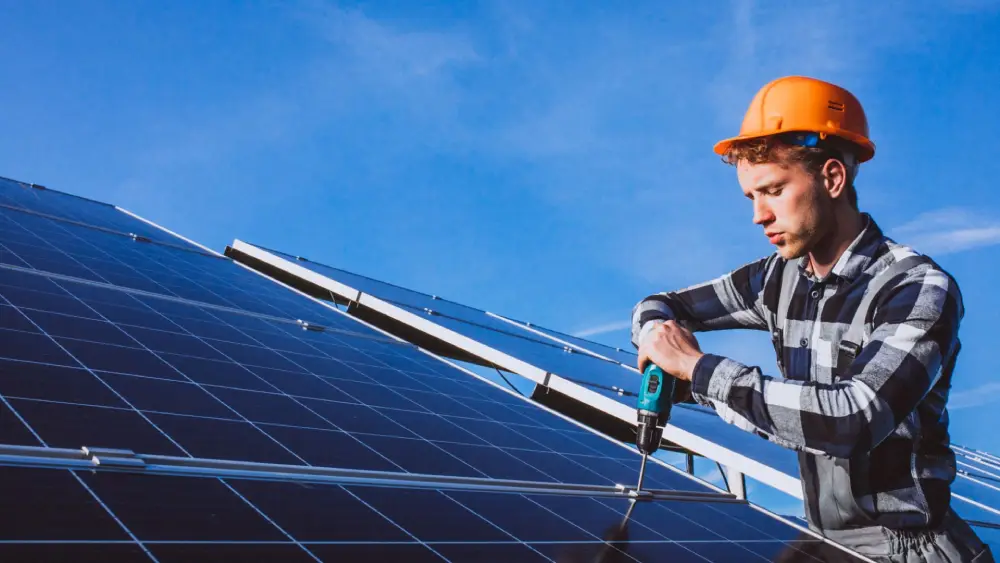
Introduction: The Rise of Solar PV Design Build Projects
The solar industry is evolving rapidly, and Solar PV Design Build Projects are transforming the way installations are executed. This integrated approach streamlines the entire process, from concept to commissioning, reducing delays, costs, and complexity.
Defining Solar PV Design Build Projects
A Solar PV Design Build Project is an end-to-end methodology where a single entity handles both the design and construction of the solar system. This approach contrasts with traditional segmented methods, providing clients with cohesive project management and accountability.
The Traditional Approach vs. Design-Build Methodology
Traditional solar projects often separate design and construction, resulting in coordination challenges, delays, and higher costs. In the design-build model, a unified team manages both phases, ensuring seamless collaboration and efficiency.
Benefits of the Design-Build Model
Single-Point Responsibility
With one entity accountable for design, procurement, and construction, clients face fewer coordination issues, and communication is more streamlined.
Accelerated Project Timelines
Integrated design and construction workflows minimize delays, enabling faster project completion and quicker energy production.
Cost Optimization and Predictability
Early integration of design and construction reduces change orders, identifies cost-saving opportunities, and ensures budget adherence.
Initial Feasibility and Site Assessment
Before design begins, a thorough site assessment evaluates roof or ground conditions, shading, topography, and environmental factors. Accurate feasibility studies prevent inefficiencies and enhance long-term system performance.
System Design and Engineering
Layout Planning and Panel Placement
Optimal panel placement maximizes sunlight capture and minimizes shading. Advanced modeling ensures high energy yield.
Electrical System Design
Proper sizing of inverters, cabling, and protective devices ensures safety, efficiency, and regulatory compliance.
Structural and Mounting Considerations
Racking, tilt angles, and mounting systems are designed to withstand environmental stresses while optimizing energy production.
Permitting and Regulatory Compliance
The design-build team handles local permits, utility approvals, and adherence to electrical and building codes. Early compliance reduces delays and avoids costly revisions.
Procurement and Material Selection
Selecting high-quality modules, inverters, and mounting systems ensures durability and performance. Bulk procurement through the design-build firm can also optimize costs.
Construction and Installation Management
Coordinated scheduling, on-site supervision, and adherence to design plans ensure smooth installation. Project managers oversee timelines, quality, and safety throughout the build.
Integration with Existing Infrastructure
Seamless integration with building or grid infrastructure is critical. Proper interfacing ensures system reliability and uninterrupted operations.
Quality Assurance and Safety Protocols
Strict QA measures, inspections, and adherence to safety standards prevent defects, reduce downtime, and maintain high operational standards.
Commissioning and Performance Testing
System commissioning verifies electrical performance, energy yield, and safety compliance. Thorough testing ensures that the solar installation operates as designed.
Monitoring and Maintenance Planning
Solar PV Design Build Projects often include monitoring systems, predictive maintenance strategies, and operational guidance to sustain peak performance.
Technological Tools Used in Design-Build Projects
Advanced tools such as CAD, BIM, and simulation software optimize design accuracy, energy modeling, and collaborative workflows, streamlining both design and construction.
Comparison: Design-Bid-Build vs. Design-Build in Solar Projects
| Feature | Design-Bid-Build | Design-Build |
|---|---|---|
| Responsibility | Separate entities for design and construction | Single entity manages design and construction |
| Project Timeline | Longer, sequential phases | Shorter, integrated workflow |
| Cost Control | Higher risk of change orders | Better budget predictability |
| Communication | Multiple points of contact, potential misalignment | Streamlined, single point of contact |
| Flexibility | Less adaptable to design changes | Highly adaptable throughout project |
Challenges in Design-Build Solar Projects and Solutions
Challenges include coordinating multidisciplinary teams, ensuring accurate design translation, and managing procurement logistics. Solutions involve integrated project management software, early stakeholder involvement, and rigorous quality checks.
Case Studies of Successful Solar PV Design Build Projects
Solar PV Design Build Projects examples from commercial rooftops, utility-scale installations, and hybrid projects demonstrate how design-build methodology reduces installation time, improves energy yield, and ensures project reliability.
Conclusion: Maximizing Efficiency and Reliability Through Design-Build Projects
Solar PV Design Build Projects provide a streamlined, cost-effective approach to solar installations. By integrating design, procurement, and construction under a single entity, these projects minimize delays, optimize energy production, and ensure reliable performance. Selecting a skilled design-build partner is pivotal for maximizing efficiency, reducing risk, and achieving long-term sustainability.