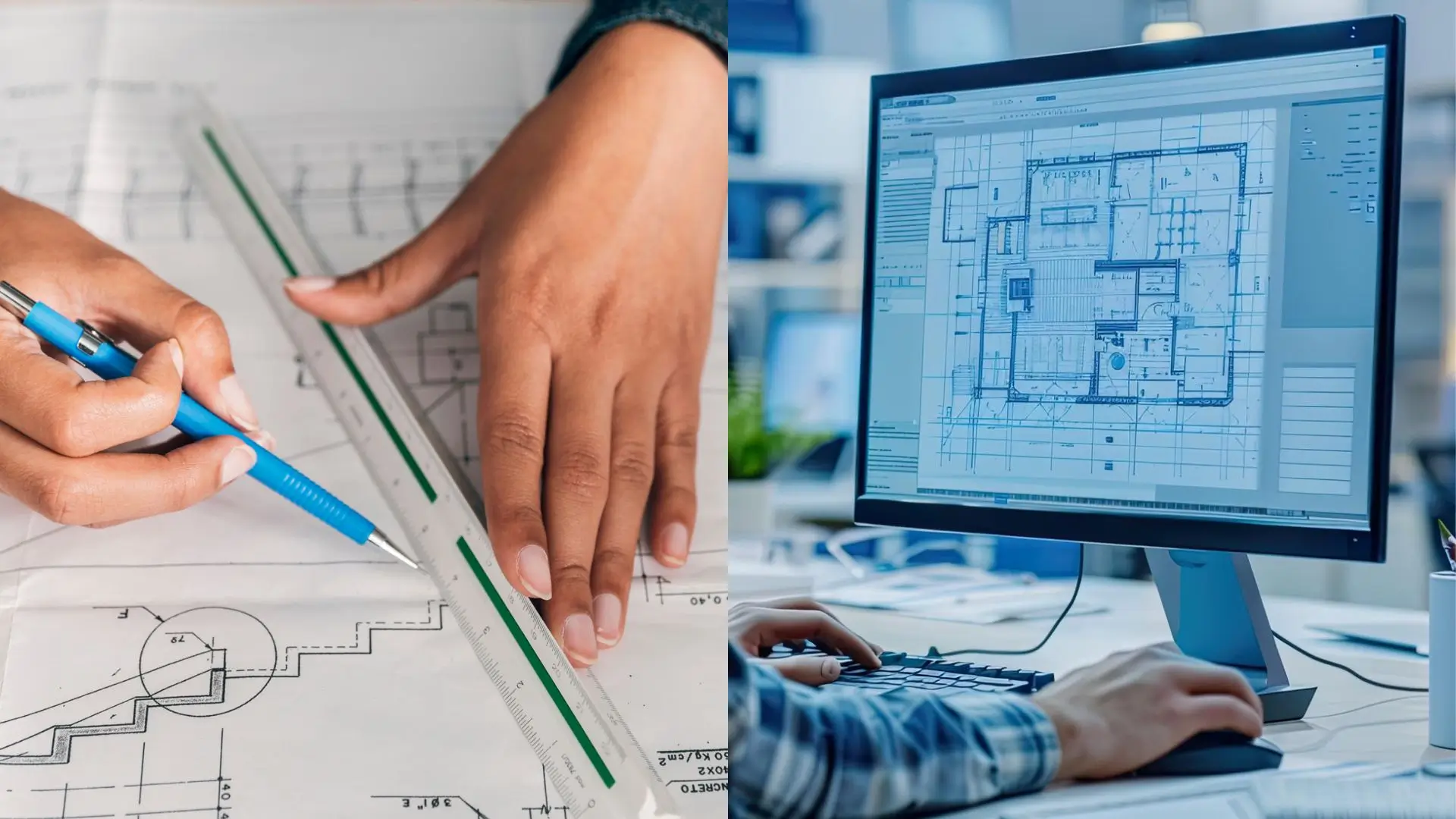
Introduction to MEP Drafting Services and Design Services
In modern construction, MEP Drafting Services and design services are indispensable. Every building, whether an avant-garde office tower or an intricate healthcare facility, relies on mechanical, electrical, and plumbing systems that function as a cohesive organism. Understanding the nuanced difference between MEP Drafting Services and design services is not just semantic — it’s strategic. The two are distinct pillars of project delivery, each with its own purpose, skill sets, and outcomes. Clarity here prevents costly missteps and enhances collaboration.
Design services are visionary. Drafting services are meticulous. Together, they form the backbone of any successful building engineering effort.
What Are MEP Drafting Services?
Defining MEP Drafting Services
MEP Drafting Services involve creating precise and fully annotated technical drawings that represent engineered systems. These drawings provide contractors with the information required to fabricate, install, and coordinate mechanical, electrical, and plumbing installations. Drafting transforms conceptual engineering into tangible documentation.
Core deliverables of drafting work
Deliverables typically include detailed schematics, plan views, elevations, and fabrication diagrams. These aren’t just lines on paper. They are meticulously organized representations of collision-free systems, complete with dimensions, labels, and references that ensure clarity on the construction floor.
What Are MEP Design Services?
Defining MEP Design Services
MEP design services encompass the creative and analytical aspects of engineering. Designers develop system layouts, calculate loads, select equipment, and ensure compliance with codes and standards. These services are inherently analytical and strategic.
Core deliverables of design work
Engineers produce system calculations, design intent documents, schematic designs, and performance specifications. In essence, design services provide the blueprint for functionality — how and why systems work.
The Technical Distinction Between Drafting and Design
Drafting as documentation
Drafting documents what has been engineered. It is exacting and requires attention to line weight, annotation standards, and spatial relationships. Precision is paramount.
Design as engineering strategy
Design is analytical and problem-solving. It defines the parameters of performance, energy efficiency, safety, and compliance. Design precedes drafting and informs it.
The Workflow of MEP Drafting Services
Translating design into precise schematics
Drafting begins once design intent is established. It transforms conceptual diagrams into construction-ready drawings that include fabrication details, junctions, and spatial coordination.
Software tools and drafting precision
Draftsmen leverage advanced CAD and BIM platforms. These tools allow detailed layering, clash detection, and dynamic updating, which are essential for accurate MEP Drafting Services.
The Workflow of MEP Design Services
Conceptual engineering and system architecture
Design services begin with system conceptualization. Engineers assess requirements, project context, and performance goals. This phase is high-level but deeply analytical.
Simulation, load calculations, and performance modeling
Calculations — whether thermal loads or electrical demand — shape decisions. Performance models validate assumptions and optimize system choices before drafting even begins.
How MEP Drafting Services Support Design Services
Bridging conceptual design to construction documentation
Drafting services translate the abstract into actionable detail. This nexus ensures that engineered intent becomes executable documentation, drastically reducing ambiguity.
Reducing ambiguity through detailed drawings
Clarity is king on the construction site. Detailed drawings eliminate guesswork and misinterpretation, accelerating installation and reducing change orders.
When Drafting Precedes Design
Reverse design scenarios
Occasionally, preliminary drafting might be required before detailed design, particularly in renovation contexts where as-built conditions must be documented prior to engineering.
Practical use cases and constraints
In such cases, drafting provides the scaffold upon which design decisions are later built. Yet, the technical rigor of design always remains essential.
Skills Required for MEP Drafting Services
Technical drawing expertise
Drafting demands mastery of technical conventions and rigorous adherence to standards. A proficient draftsman translates sophisticated engineering into crystal-clear illustrations.
Coordination and standards compliance
Draftsmen must integrate multiple disciplines. Mechanical ductwork, electrical conduit, and plumbing risers must co-exist without conflict. Standards compliance is non-negotiable.
Skills Required for MEP Design Services
Engineering judgment and problem-solving
Designers must think critically — anticipating issues that drafting alone cannot resolve. Logic, calculation, and systems thinking define the role.
Code compliance and system optimization
Engineers ensure that systems not only function but also comply with local codes and adopt energy-efficient practices. Design is both regulatory and performance-driven.
Collaboration Between Drafting and Design Teams
Seamless communication practices
Open communication between designers and drafters is foundational. When teams align early, MEP Drafting Services and design services operate as a synchronized ensemble.
Tools that unite drafting and design
Integrated BIM platforms allow shared models where updates propagate seamlessly. This technological cohesion eliminates discrepancies between design intent and drafted output.
Common Misconceptions About MEP Drafting Services
Drafting is not merely tracing
Drafting is not rote tracing of lines. It is a disciplined craft that interprets design logic with precision and anticipation of construction realities.
Drafting informs constructability
Draftsmen often identify constructability issues before they arise on site. In this sense, MEP Drafting Services contribute to design quality through practical insight.
Technology’s Role in MEP Drafting Services
CAD, BIM, and digital coordination
Today’s drafting leverages sophisticated digital frameworks. BIM enables spatial awareness and clash detection far beyond traditional CAD capabilities. These technologies elevate MEP Drafting Services to strategic problem-solving roles.
Cloud collaboration and revision control
Cloud-based tools facilitate real-time updates and version tracking, ensuring all stakeholders work from the most current data set.
Technology’s Role in MEP Design Services
Engineering analysis tools
Design services utilize simulation and analytical software to validate assumptions. Thermal modeling, energy analysis, and load forecasting inform decisions early.
Performance simulation and optimization
Optimizing systems for energy and performance is iterative. These tools allow engineers to explore alternatives and balance trade-offs before drafting begins.
Time and Cost Implications
Cost drivers in MEP Drafting Services
Time spent re-drafting due to unclear design or revisions can inflate costs. Efficient MEP Drafting Services reduce rework and streamline schedules.
Cost drivers in MEP Design Services
Design services impact material selection, system efficiency, and equipment sizing — all of which have direct cost implications. Investing in intelligent design pays dividends downstream.
Quality Assurance in Drafting vs Design
Draft review checklists
Quality in drafting is enforced through rigorous review checklists that verify adherence to standards, dimensions, annotations, and inter-disciplinary coordination.
Design validation and peer review
Design is validated through peer review, simulations, and compliance checks. This ensures systems perform as expected in real conditions.
| Aspect | MEP Drafting Services | MEP Design Services |
|---|---|---|
| Purpose | Create precise construction drawings | Develop engineering concepts and strategies |
| Focus | Documentation and coordination | Analysis and system planning |
| Stage | After design phase | Concept and schematic phase |
| Deliverables | Shop drawings, plans, sections | Calculations, layouts, specifications |
| Skill Set | CAD/BIM expertise, drawing standards | Engineering judgment, load calculations |
| Impact | Reduces installation errors | Optimizes performance and compliance |
| Contribution | Ensures clarity on-site | Prevents redesigns, accelerates decisions |
Case Studies: Drafting vs Design in Real Projects
Commercial building example
In commercial projects, MEP Drafting Services ensured ductwork and utilities navigated dense structural framing without conflict, eliminating costly field revisions.
Healthcare facility example
In a healthcare facility, robust design services optimized air handling and redundancies, while drafting ensured surgical suites’ mechanical precision met stringent regulatory requirements.
Choosing the Right Service for Your Project
Project phase considerations
Understanding the project phase guides whether drafting, design, or both are prioritized. Early engagement of both yields the best outcomes.
Scope clarity for successful delivery
Defining scope prevents overlap and ensures every deliverable furthers project goals. Drafting and design services should be scoped with clarity and purpose.
Conclusion: Harmonizing MEP Drafting Services and Design Services
The synergy that drives project success
The interplay between MEP Drafting Services and design services is not a hierarchy but a partnership. One translates intent; the other creates intent. Together, they deliver clarity, precision, and performance.
Final thoughts on differentiation
Understanding the differences enhances collaboration and project outcomes. Drafting without design lacks context. Design without drafting lacks execution. Both are essential, complementary, and indispensable in modern construction engineering.