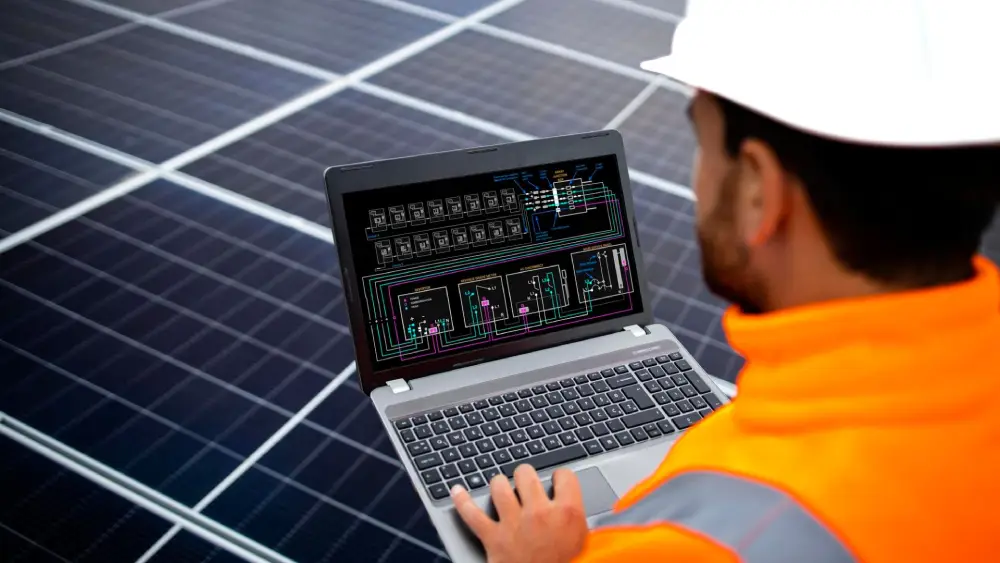
Introduction: Ensuring Sustainable Solar Power
Solar energy adoption is accelerating globally, providing businesses and homeowners with sustainable and cost-effective power solutions. Yet, without meticulous Photovoltaic System Design Engineering, even the most robust systems can underperform or degrade prematurely. Long-term reliability, optimal energy output, and financial predictability hinge on expert engineering from the earliest design stage.
Understanding Photovoltaic System Design Engineering
Definition and scope of Photovoltaic System Design Engineering
Photovoltaic System Design Engineering involves the technical planning, design, and integration of solar PV systems to maximize efficiency, reliability, and lifespan. This encompasses electrical, mechanical, and structural considerations.
Key roles and responsibilities of engineers
Engineers analyze load requirements, select components, optimize layouts, ensure safety, and integrate the PV system seamlessly with existing infrastructure. Their work directly impacts energy output and long-term ROI.
Site Assessment and Feasibility Studies
Evaluating solar irradiance and climate conditions
Understanding sun patterns, seasonal variations, and local weather conditions is essential to predict realistic energy generation.
Roof and ground-mount structural evaluations
Structural integrity assessments ensure panels and mounting systems withstand environmental stressors, including wind and snow loads.
Load Analysis and Energy Requirements
Calculating present and future energy demand
Engineers analyze consumption patterns to size the system correctly, preventing underproduction or unnecessary oversizing.
Aligning system capacity with consumption patterns
Accurate forecasting ensures the PV system meets both current and anticipated energy needs efficiently.
Module and Inverter Selection
Choosing high-efficiency PV modules
High-quality modules in Photovoltaic System Design Engineering enhance energy yield and system longevity, reducing degradation over time.
Selecting inverters for maximum energy conversion
Choosing the right inverter ensures minimal losses and reliable energy conversion under variable conditions.
System Layout Optimization
Panel orientation, tilt, and spacing considerations
Optimizing layout maximizes sunlight capture, prevents self-shading, and ensures uniform energy production.
Minimizing shading and performance losses
Shading analysis identifies obstructions and guides strategic panel placement for consistent output.
Electrical Design and Protection
Conduit and cable sizing
Proper electrical design prevents overheating, voltage drops, and ensures compliance with electrical standards.
Implementing surge protection and safety mechanisms
Surge protectors, breakers, and grounding systems safeguard the system from faults and transient surges.
Integration with Existing Infrastructure
Synchronization with building electrical systems
Seamless integration reduces installation complexity and enhances energy efficiency.
Minimizing retrofitting costs
Early coordination prevents expensive modifications to accommodate the new PV system.
Energy Storage and Management
Battery sizing and placement strategies
Correct battery sizing ensures backup power availability and efficient energy utilization.
Optimizing storage for peak load shaving and backup
Intelligent storage deployment mitigates peak demand charges and enhances system reliability.
Performance Simulation and Modeling
Using software tools for energy yield prediction
Simulation tools allow engineers to predict energy production and assess system behavior under different conditions.
Stress-testing systems for reliability
Simulating environmental stressors and load variations identifies potential weaknesses before installation.
Monitoring and Predictive Maintenance
Real-time performance tracking
Monitoring systems detect inefficiencies or faults instantly, preventing prolonged energy losses.
Proactive maintenance to extend system life
Scheduled inspections and predictive maintenance mitigate degradation, ensuring consistent performance.
Compliance and Regulatory Standards
Meeting local, national, and international codes
Compliance ensures legal operation, safety, and eligibility for incentives.
Navigating incentives, net metering, and permits
Strategic planning maximizes financial benefits and expedites project approvals.
Thermal Management and Environmental Considerations
Mitigating temperature-related efficiency losses
Heat management strategies prevent excessive thermal losses that reduce module efficiency.
Accounting for local environmental stressors
Wind, humidity, dust, and corrosion resistance are factored into design to prolong system life.
Lifecycle Cost Analysis
Estimating total cost of ownership
Engineers calculate installation, operation, and maintenance costs to evaluate ROI accurately.
Planning for replacement, O&M, and degradation
Anticipating long-term costs ensures financial predictability and reduces unexpected expenditures.
Risk Assessment and Mitigation
Identifying technical and operational risks
Potential issues such as module failure, inverter malfunction, or weather impacts are assessed early.
Developing contingency plans to avoid performance drops
Backup strategies and redundancy ensure the system remains operational under adverse conditions.
Scalability and Future Expansion
Designing systems to accommodate future energy growth
Planning for modular expansion allows additional capacity as energy demands increase.
Modular layouts for incremental expansion
Phased implementation ensures minimal disruption and optimizes initial capital investment.
Technology Innovation and Optimization
Leveraging advanced modules and inverters
High-performance components enhance efficiency, reliability, and durability over the system’s lifespan.
Incorporating IoT, AI, and smart grid technologies
Intelligent systems monitor, optimize, and automate performance, maximizing both energy yield and financial predictability.
Case Studies: Long-Term Performance Success
Commercial rooftop PV system example
A corporate rooftop installation used optimized module selection, advanced inverters, and predictive analytics to maintain consistent output over a decade.
Utility-scale solar farm example
A 100 MW solar farm implemented modular layouts, advanced storage, and monitoring systems, ensuring high energy reliability and predictable financial returns.
Conclusion: Strategic Importance of Expert PV System Design
Summary of performance, reliability, and financial benefits
Meticulous Photovoltaic System Design Engineering guarantees optimal energy production, system longevity, and predictable financial outcomes.
Recommendations for developers and stakeholders
Investing in expert design from the outset secures long-term performance, minimizes operational risks, and maximizes ROI, making solar PV projects both sustainable and financially viable.