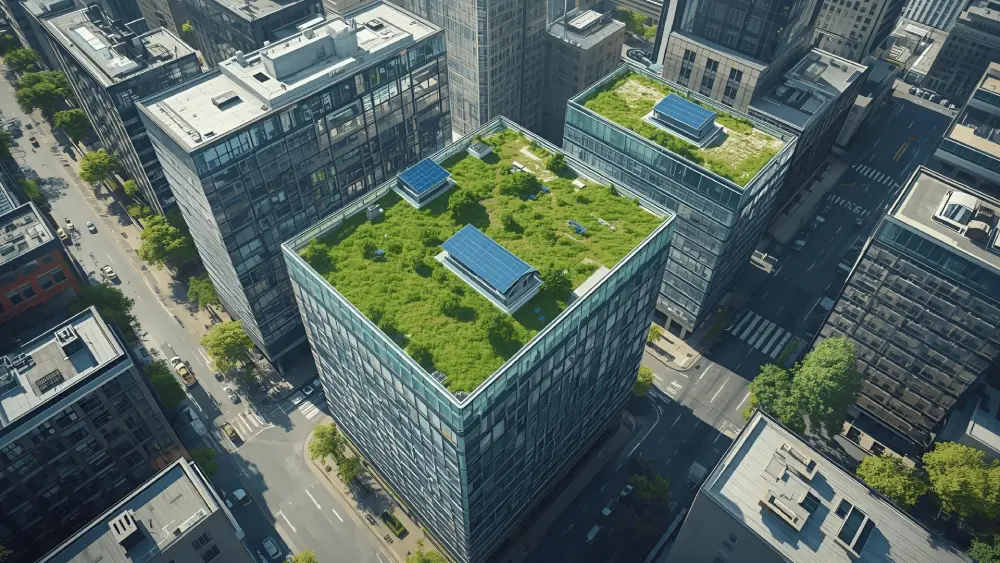
With climate change at the forefront of global priorities, businesses across industries are facing mounting pressure to lower their environmental impact. Commercial buildings—responsible for nearly 40% of global energy-related CO₂ emissions—are a major part of this equation.
Reducing a building’s carbon footprint isn’t just about switching to renewable energy; it requires deep, systemic changes to how the building is designed, constructed, and operated. That’s where Mechanical, Electrical, and Plumbing (MEP) engineers come in.
MEP professionals are uniquely positioned to drive sustainability through energy efficiency, intelligent systems, and lifecycle-based design strategies. Here’s how they’re reshaping the path toward a low-carbon future in commercial real estate.
Understanding Carbon Footprint in Buildings
A building’s carbon footprint includes both operational carbon (emissions from heating, cooling, lighting, and energy use) and embodied carbon (emissions from materials, construction, and maintenance).
While architects focus on materials and structure, MEP engineers influence how efficiently the building runs—which determines the bulk of emissions throughout its lifetime. Reducing this operational carbon footprint is key to achieving net-zero carbon goals.
1. Energy-Efficient HVAC Design
HVAC systems are the largest energy consumers in most commercial properties, accounting for 40–50% of total building energy use. MEP engineers reduce emissions by designing systems that deliver the same comfort with less energy.
Strategies include:
- Variable Refrigerant Flow (VRF) systems that adjust output based on real-time demand.
- Energy Recovery Ventilators (ERVs) to reuse exhaust air energy.
- Geothermal heating and cooling to leverage stable ground temperatures.
- Advanced controls integrated with Building Management Systems (BMS).
Optimized HVAC design doesn’t just reduce energy use—it cuts operational emissions year after year.
2. Renewable Energy Integration
Incorporating renewable energy sources like solar, wind, or geothermal is one of the most direct ways MEP engineers can lower a building’s carbon footprint.
Electrical engineers design systems that:
- Integrate solar photovoltaic (PV) panels with grid-tied or battery-backed configurations.
- Enable net metering for excess energy export.
- Use smart inverters to balance renewable and grid power efficiently.
When combined with electrified HVAC and water heating, renewables significantly reduce dependence on fossil fuels.
3. Water Conservation and Efficient Plumbing Design
Water heating and pumping consume large amounts of energy, indirectly increasing carbon emissions. MEP engineers implement smart plumbing solutions that minimize both water and energy waste.
Examples include:
- Low-flow fixtures and sensor-based faucets.
- Greywater recycling systems for non-potable uses.
- Heat recovery systems that reclaim energy from wastewater.
Such systems help buildings achieve both LEED credits and measurable reductions in carbon output.
4. Advanced Building Automation Systems (BAS)
Smart technologies are essential for sustainable operations. A well-designed Building Automation System allows centralized monitoring of HVAC, lighting, and water systems—optimizing performance in real-time.
Benefits include:
- Reduced energy waste through demand-based control.
- Predictive maintenance that prevents system inefficiencies.
- Detailed analytics for ongoing carbon reduction reporting.
In other words, automation converts sustainability from a static goal into a continuous process.
5. Low-Carbon Electrical Design
Electrical engineers can drastically cut carbon emissions through smarter distribution and equipment choices.
- LED lighting with adaptive controls reduces electricity use.
- Energy-efficient transformers and variable frequency drives (VFDs) minimize power loss.
- Microgrids and storage systems enhance resilience while reducing fossil-based backup power.
Moreover, integrating power factor correction ensures systems draw electricity efficiently, lowering both costs and emissions.
Carbon Reduction Strategies at a Glance
Here’s a quick summary of how MEP engineering disciplines work together to drive carbon efficiency:
| Discipline | Primary Strategies | Carbon Reduction Impact |
|---|---|---|
| Mechanical (HVAC) | VRF systems, geothermal loops, demand-based ventilation | Reduces operational energy by 30–50% |
| Electrical | LED lighting, renewable integration, smart controls | Lowers electricity-related CO₂ emissions by 20–40% |
| Plumbing | Low-flow fixtures, heat recovery, greywater reuse | Decreases water heating emissions by 15–25% |
| Automation | BAS, IoT sensors, energy analytics | Improves system efficiency by 10–20% annually |
These incremental improvements, when combined, can reduce a building’s total carbon footprint by up to 60% over its lifecycle.
6. Lifecycle Carbon and Material Optimization
MEP engineers are increasingly considering embodied carbon—the emissions tied to materials used in systems.
By specifying low-carbon ductwork, copper alternatives, and recyclable insulation materials, engineers minimize environmental impact from production to disposal.
Additionally, Life Cycle Assessment (LCA) tools allow designers to quantify the total emissions impact and make data-driven design choices.
7. Electrification and Decarbonization
As cities like Los Angeles, San Francisco, and New York push toward all-electric building mandates, MEP engineers are leading the transition.
Switching from gas-based boilers and chillers to electric heat pumps and induction systems enables full electrification, paving the way for net-zero carbon operations when powered by renewables. Budlong’s all-electric affordable housing building is an example of this approach in practice.
Budlong Insight: Engineering Smarter for a Cooler Planet
At Budlong, we believe carbon reduction isn’t achieved through a single solution—it’s the result of a strategic engineering ecosystem.
Our teams integrate mechanical, electrical, and plumbing expertise to design systems that reduce emissions without compromising comfort or functionality.
By combining energy modeling, smart system integration, and low-carbon design strategies, Budlong helps clients create commercial spaces that not only meet today’s sustainability standards but also actively contribute to a decarbonized future.
Conclusion
Reducing carbon footprints in commercial buildings demands collaboration, innovation, and a lifecycle mindset. MEP engineers sit at the heart of that transformation—bridging technology, efficiency, and sustainability.
Through smarter design, electrification, and renewable integration, they’re turning buildings into powerful tools for climate action.
In the race to net-zero, one thing is clear: sustainability isn’t just about compliance anymore—it’s about intelligent engineering that protects both people and the planet.